The ScotCalc Stud Analyzer is a free online engineering tool designed to help users quickly estimate the structural demands on a cold-formed steel wall stud before performing a full engineering verification. Rather than replacing detailed structural analysis, it streamlines the early design process by calculating the loads, moments, shear forces, bracing requirements, and preliminary stud options that can then be verified by an engineer of record.
By entering a project’s basic geometry and loading conditions, users can determine whether a wall is likely to work with standard SFIA stud sections in just a few minutes.
Click on the images below to expand view.
What Does the ScotCalc Stud Analyzer Calculate?
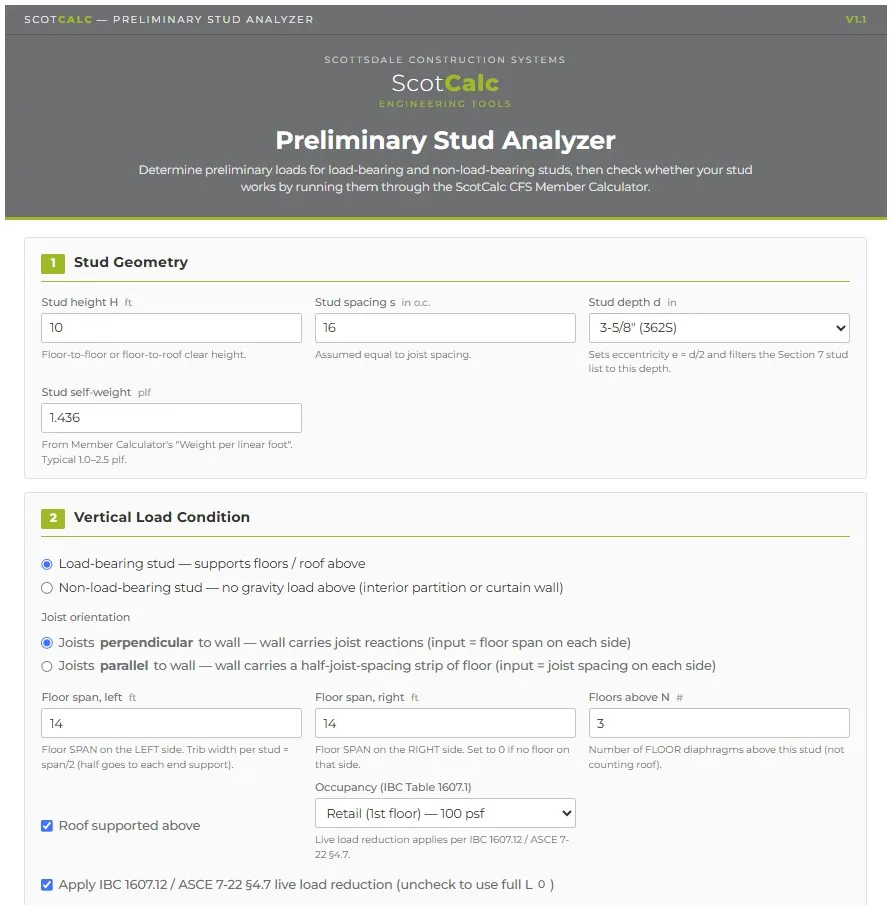
The ScotCalc Stud Analyzer combines multiple building design inputs into a single workflow, including:
- Stud height, spacing, depth, and self-weight
- Load-bearing or non-load-bearing wall conditions
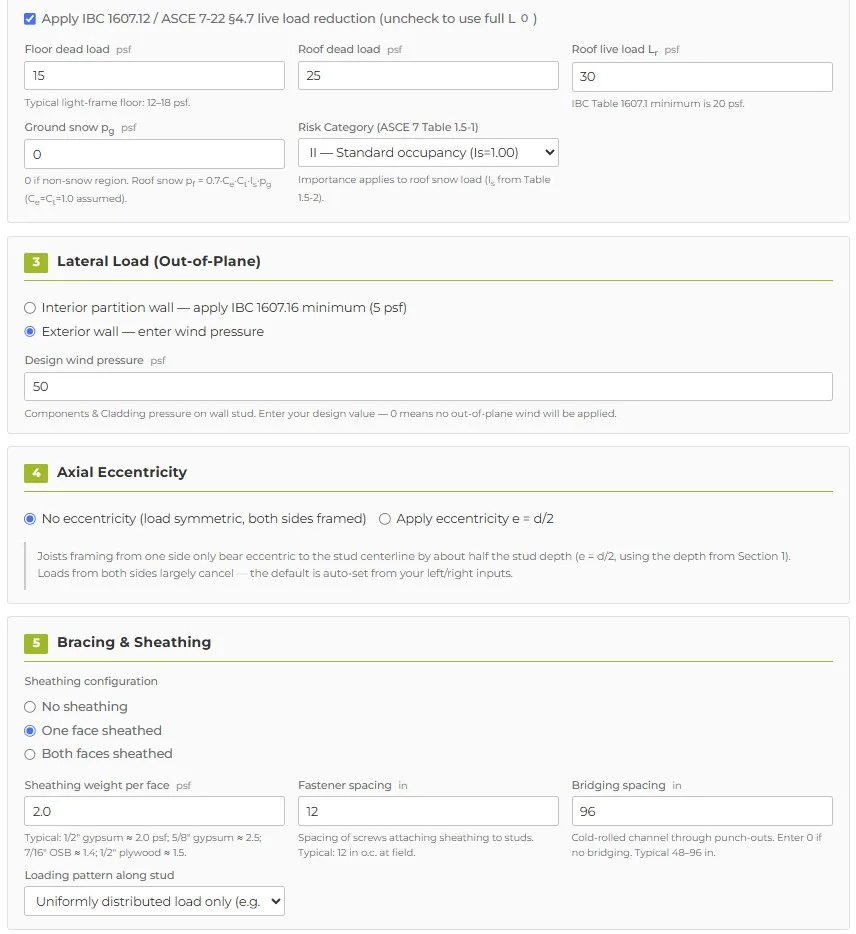
- Floor and roof gravity loads
- Occupancy loads from the International Building Code (IBC)
- Live load reductions per ASCE 7
- Roof snow loads
- Wind pressures for exterior walls
- Out-of-plane lateral loading
- Axial eccentricity
- Sheathing configuration and bracing conditions
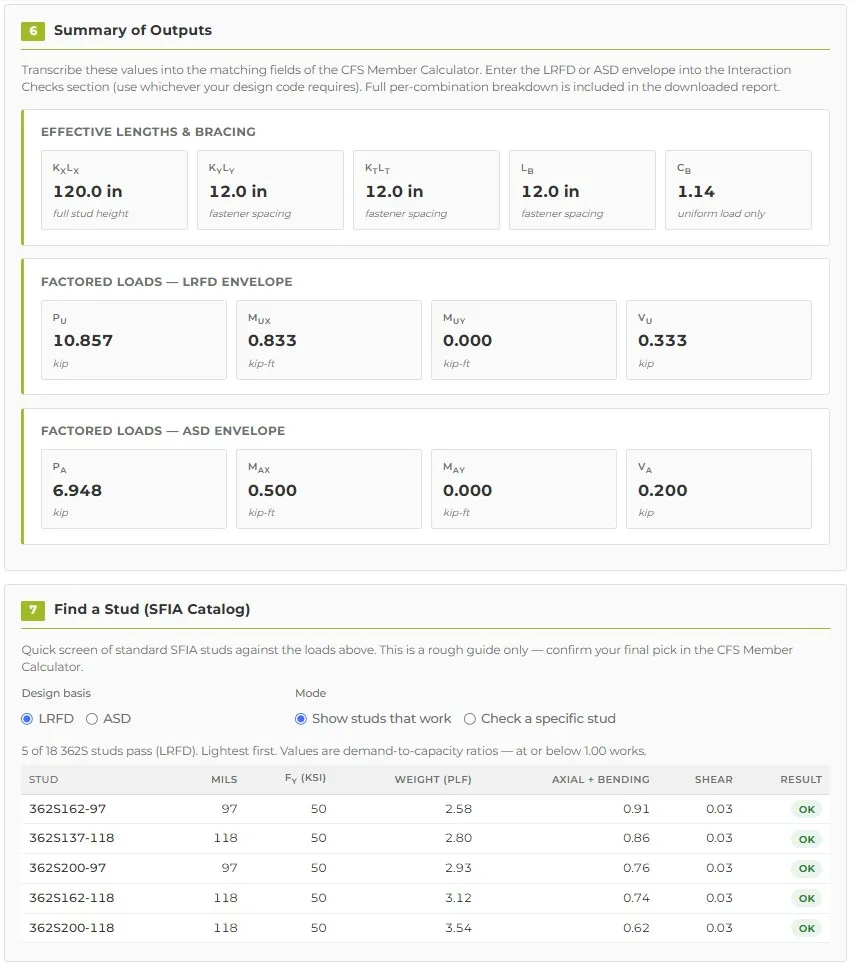
Using these inputs, the ScotCalc Stud Analyzer automatically calculates:
- Effective unbraced lengths
- LRFD and ASD axial loads
- Bending moments
- Shear forces
- Required bracing parameters
- Preliminary SFIA stud recommendations ranked by efficiency
These calculated values can then be copied directly into the ScotCalc CFS Member Calculator, where the final AISI code checks and member verification are completed.
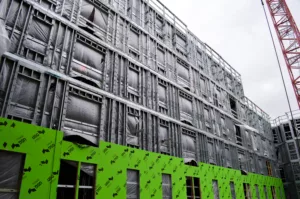
How Does the ScotCalc Stud Analyzer Help Steel Framing Designers?
During conceptual design, engineers and designers often need to answer questions such as:
- Will a 362S162 stud likely work?
- Should a deeper section be considered?
- How much gravity load will this wall carry?
- What wind load governs the design?
- Is additional bracing likely required?
Instead of manually performing preliminary calculations, the analyzer consolidates these variables into one interface, allowing designers to evaluate multiple wall configurations in seconds.
Benefits of the ScotCalc Stud Analyzer include:
- Faster preliminary sizing of studs
- Reduced manual calculations
- Easy comparison of alternative wall layouts
- Earlier identification of potential design issues
- Improved confidence before detailed engineering begins
- Quickly compare different stud depths, widths, and thicknesses before performing a full engineering check
- Support value engineering by identifying lighter, more efficient framing solutions that still satisfy structural requirements
- Compare the weight per linear foot of different stud options to minimize steel usage, reduce material costs, and decrease the overall building weight
- Evaluate multiple framing options early in the design process to optimize structural performance and project economics
The result is a more efficient design workflow with fewer iterations and better-informed engineering decisions.
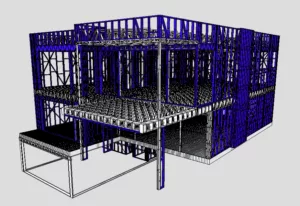
How Does the ScotCalc Stud Analyzer Help Existing Scottsdale Customers?
Production facilities frequently receive project information before final engineering is complete. Machine operators and production managers often need an early indication of:
- Likely stud depth
- Material thickness
- Coil requirements
- Production planning
- Inventory needs
The ScotCalc Stud Analyzer provides a practical estimate of the structural member likely to be required, allowing fabrication teams to begin planning well before final engineering files arrive.
Beyond production planning, this tool also helps existing Scottsdale customers evaluate new business opportunities before committing to a project.
Benefits of the ScotCalc Stud Analyzer include:
- Estimate material consumption before fabrication begins
- Prepare appropriate steel coils and inventory
- Improve production scheduling and machine utilization
- Anticipate manufacturing requirements earlier in the project
- Coordinate fabrication planning with engineering teams
- Quickly determine whether an existing roll forming machine can manufacture the profiles required for a new project
- Assess whether a potential project fits within the capabilities of current production equipment before submitting a proposal or bid
- Validate whether a project can be redesigned using a different stud profile that can be produced on an existing machine while still passing engineering verification
- Compare multiple framing options to identify the most economical design without compromising structural performance
- Support value engineering by selecting lighter sections that reduce steel consumption, lower material costs, decrease shipping weight, and reduce the overall building weight
- Increase confidence when quoting projects by understanding machine capability before fabrication begins
This allows our manufacturers to make faster quoting decisions, maximize the capabilities of their existing equipment, improve project profitability, and avoid pursuing projects that fall outside their manufacturing capabilities.
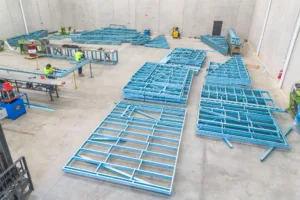
How Does the ScotCalc Stud Analyzer Help New Customers Considering Roll Forming Machines?
For companies evaluating whether to enter the cold-formed steel framing industry, structural design can often appear complex. The ScotCalc Stud Analyzer demonstrates how Scottsdale’s engineering ecosystem simplifies that process while also helping businesses make better equipment investment decisions.
Instead of relying on assumptions, prospective customers can use real project scenarios to understand the framing requirements for the markets they intend to serve.
The ScotCalc Stud Analyzer allows new users to:
- Input the types of projects they expect to fabricate over the next 3, 5, and 10 years
- Evaluate the stud sizes and structural demands those projects are likely to require
- Determine which Scottsdale roll forming machine, or combination of machines, best aligns with their long-term business objectives
- Compare different market segments, including residential, commercial, hospitality, education, healthcare, modular construction, and mid-rise buildings
- Better understand how machine profile capabilities influence future project opportunities
- Use real project data to support the roll forming machine selection process rather than relying on assumptions
- Build a stronger business case when planning capital equipment investments
- Support financial planning and return-on-investment analysis by matching equipment capabilities to projected workloads
- Develop more accurate business plans based on the markets they intend to pursue and the products they expect to manufacture
- Understand how Scottsdale’s integrated engineering software supports the entire workflow from preliminary design through engineering and manufacturing
Rather than selecting a roll forming machine based only on today’s projects, prospective customers can use the ScotCalc Stud Analyzer to make informed investment decisions that position their business for long-term growth while minimizing the need for additional equipment purchases as their capabilities expand.
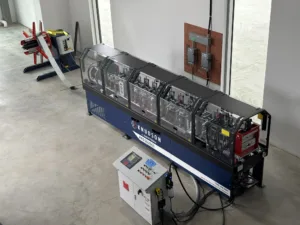
Scottsdale’s Connected Manufacturing & Engineering Workflow
The ScotCalc Stud Analyzer is designed as the first step in Scottsdale’s connected engineering ecosystem.
- Enter the building geometry and loading conditions.
- Calculate preliminary structural demands.
- Review recommended SFIA stud sections.
- Compare alternative stud profiles for weight, efficiency, and manufacturability.
- Perform detailed AISI code compliance and engineering verification.
- Finalize the member design for fabrication within the Scottsdale roll forming ecosystem.
By connecting preliminary design with detailed engineering verification and manufacturing planning, the ScotCalc Stud Analyzer helps engineers, manufacturers, and business owners make faster, more informed decisions. Whether optimizing a building for value engineering, determining if an existing machine can produce a project, or selecting the right roll forming equipment for future business growth, this tool simplifies decision-making while reducing risks throughout the steel framing design-to-manufacturing process.
Additional Scottsdale Roll Forming Solutions and Resources
- Blog – How to Make Cold-Formed Steel Sections Better: Considerations and Approaches
- Blog – Revealing Each Hidden Layer Inside CFS Walls
- Blog – Drywall and Curtainwall Delivered with Thin-Section KFD 2025 Machine
- Blog – Everything You Need to Know About Shaft Walls
- Blog – How to Make Walls and Ceilings with Roll Forming Technology
- Blog – Steel Framing Business: Capitalizing on the 2032 Market Growth
- Video – New Research Unlocks Greater Heights for Mid-Rise CFS Structures
- Video – Cold-Formed Steel Framing in Ultra-Luxurious Australian Gold Coast
- Case Studies
- Sketchfab 3D Model Library of Real CFS Projects with Roll Forming Technology
To learn more about Scottsdale’s roll forming solutions and steel framing ecosystem, visit us at www.scottsdalesteelframes.com, call us at +1 (888) 406-2080, or email us at rollformers@scottsdalesteelframes.info.