Most individuals only see painted drywall, but high-performing CFS walls are carefully engineered wall assemblies that work together to provide structural strength, fire resistance, moisture protection, thermal performance, and durability. From CFS studs that support the building to exterior wall panels and cladding that protect it from the weather, every layer has a specific purpose. Understanding how these steel-framed walls are built helps explain why modern building envelopes perform the way they do and why properly designed wall assemblies are critical for long-term performance. Here we dive into the quality and arrangement of each layer inside the wall panels and how they each affect the complete wall system performs.
Breaking Down the Layers of CFS Walls
Layer 1: Interior Wall Board in Wall Assemblies
The first layer of most wall assemblies is gypsum wallboard installed on the room side. Between dwelling units and along corridors, fire-rated walls use multiple layers of gypsum board. This layer provides the finished interior surface while contributing to fire resistance and sound control.
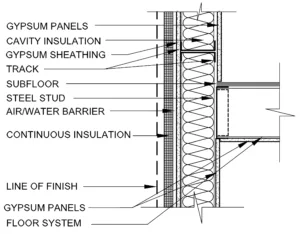
Image Source: BuildSteel
Layer 2: CFS Studs Form the Structure
The next layer consists of vertical CFS studs, the cold-formed steel framing members that support the building and transfer loads from the floors above. These CFS studs provide the structural backbone of steel-framed walls and allow the rest of the wall system to perform its intended function. CFS studs are custom fabricated into wall panels using our advanced roll forming technology.
Layer 3: Insulation Between the CFS Studs
Cavity insulation, typically fiberglass or mineral wool batt insulation, is installed between the CFS studs. This insulation helps control heat flow and improves acoustic performance. However, insulation alone cannot eliminate heat transfer because the steel framing conducts heat through the wall. That challenge is addressed later in the assembly.
For in-depth information on this subject, refer to our article “Complete Guide to Thermal Bridging in Cold-Formed Steel Framing”.
Layer 4: Structural Bracing for Selected Steel-Framed Walls
Some steel-framed walls include a structural bracing panel made from oriented strand board, plywood, or steel sheet attached to the outside face of the framing. This layer prevents the wall from racking during wind or earthquake loading. In some designs, diagonal steel strap bracing performs the same function. Only the engineer-selected braced walls receive this layer; many exterior walls do not require it.
For in-depth information on this subject, refer to our article “Cold-Formed Steel Framing in High-Seismic Regions: All You Need to Know”.
Layer 5: Exterior Sheathing Supports Wall Panels
A moisture-resistant gypsum sheathing board is installed outside the framing to close in the structure and create a continuous surface for the remaining exterior wall panels, cladding systems, and other wall panels used to finish the building. It also contributes additional fire resistance while supporting the layers installed beyond it.
Layer 6: Water-and-Air Barrier for Wall Assemblies
A continuous water-and-air barrier is installed over the exterior sheathing. Whether applied as a wrap or as a fluid-applied membrane, this layer keeps wind-driven rain and air leakage out while still allowing the wall to dry. It serves as the primary weather barrier within modern wall assemblies.
Layer 7: Continuous Insulation Improves Steel-Framed Walls
Continuous rigid insulation is installed across the outside of the wall without interruptions. Unlike cavity insulation, this uninterrupted layer blocks heat from traveling through the CFS studs, greatly improving the thermal performance of steel-framed walls.
Layer 8: Exterior Cladding Completes Wall Panels
The final layer consists of the visible exterior finish, including brick, metal, fiber-cement, stucco, or similar materials. These exterior wall panels and cladding provide the building’s appearance while serving as the first line of defense against weather. Because cladding alone is not fully watertight, the water-and-air barrier behind it remains essential.
Exterior cladding can be fabricated using advanced roll forming technology. For more information, refer to our case study “External Cladding of Student Housing Development in Canterbury, UK”.

Thermal Bridging in CFS Walls
High-performing CFS walls achieve excellent thermal performance through carefully designed wall assemblies that manage heat flow across the building envelope. Because steel conducts heat more readily than insulation, effective wall design incorporates strategies that limit heat transfer through the framing while maintaining structural performance. Continuous insulation, proper insulation placement, and moisture control all work together to improve the effective R-value of the assembly. For example, cavity insulation alone may not deliver its full rated R-value due to heat flow through the CFS studs, but modern wall assemblies are specifically engineered to address this effect. With the right combination of materials and assembly design, steel-framed walls can deliver outstanding energy efficiency, occupant comfort, and long-term performance, even in cold climates.
Five Wall Assemblies That Improve Thermal Performance
Five common wall assemblies progressively reducing thermal bridging:
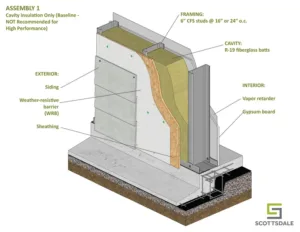
Assembly 1: Cavity Insulation Only
Uses only cavity insulation between CFS studs. This configuration serves as the baseline wall assembly for comparison. While it provides nominal thermal resistance within the stud cavity, it does not incorporate additional measures to reduce thermal bridging and therefore is generally not suitable for high-performance building envelopes or projects targeting advanced energy efficiency.
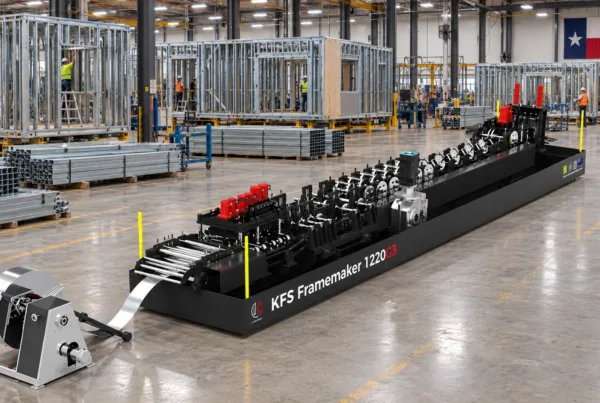
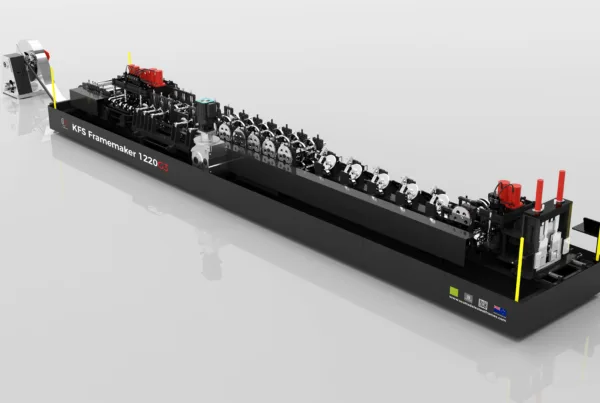
6 in. CFS studs can be fabricated with our KFS Framemaker roll forming machines.
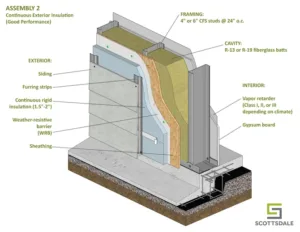
Assembly 2: Continuous Exterior Insulation
Adds continuous rigid insulation outside the structural sheathing, reducing heat flow through the framing. Proper installation requires continuous insulation with sealed joints and correctly fastened furring strips (furring channels).
4 in. CFS studs can be fabricated with our KFS Framemaker 1622 and KFS Framemaker 1420 roll forming machines.
Furring channels can be fabricated using our Knudson by Scottsdale KSE K35C Series of roll forming machines. For more information on this subject, refer to our article “Furring Channels: Ultimate Guide to Benefits and Uses”.
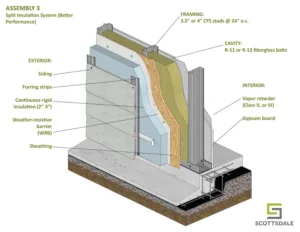
Assembly 3: Split Insulation System
Combines cavity insulation with a thicker layer of continuous exterior insulation, significantly improving thermal performance, reducing condensation risk, and supporting high-performance building standards.
3.5 in. CFS studs can be fabricated with our Scotpanel 5090, Scotpanel 7090, and KFS Framemaker 1622 roll forming machines.
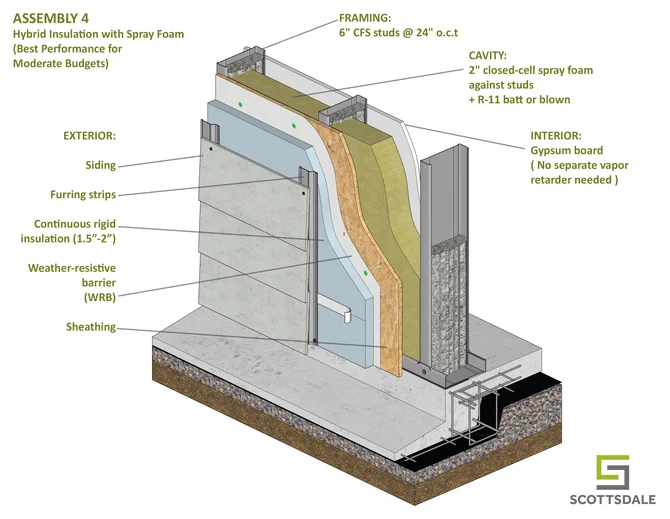
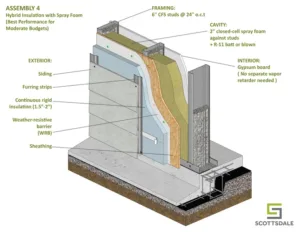
Assembly 4: Hybrid Insulation with Spray Foam
Uses a hybrid insulation with spray foam within the cavity together with continuous exterior insulation. The spray foam improves air sealing while reducing thermal bridging, and thicker closed-cell foam can also function as a vapor retarder.
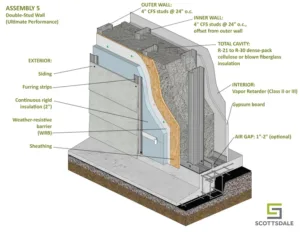
Assembly 5: Double-Stud Wall
Creates a double-stud configuration with dense-pack insulation and continuous exterior insulation. Although thicker and more expensive, this approach delivers outstanding thermal performance for projects in very cold climates.
For more information on this subject, refer to our article “Steel Framing: A Powerful Response to Thermodynamic Challenges”.
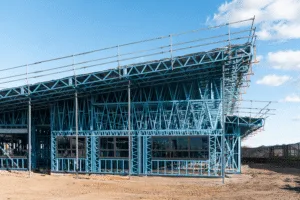
CFS walls are widely used in cold-climate construction. Scottsdale customers have successfully completed projects in demanding alpine environments using steel-framed walls engineered for these conditions. Examples include the Las Pendientes Ski Village in the Andes Mountains of Argentina by SICLA and The Chalets at DoubleTree by Hilton in Pakistan by MSA Pvt. Ltd., both of which demonstrate how advanced CFS walls can support high-performance building envelopes in regions with challenging winter climates.
More information on the assemblies above can be found in our KnowledgeBase article, “Thermal Bridging Control Strategies for Cold-Formed Steel Walls” and is available to our customers.

Scottsdale Knowledge Base is a comprehensive repository of information, data, design aids, tools, expert advices, manuals, and many other resources on prefabricated steel framing.
Not only is it a powerful tool for any architect, engineer, contractor, framing shop, homebuilder, building material supplier, or anyone involved in cold-formed steel framing, it also enables seamless integration of Scottsdale’s industry-leading steel framing roll former equipment and technology into virtually any work flow. All licensed customers and ScotSteel subscribers receive complementary access to Knowledge Base. Become a member today of our ScotAI-assisted steel-framing information platform, and elevate your business!

Building High-Performance CFS Walls with Scottsdale’s Technology
High-performing CFS walls begin with thoughtful wall assembly design, but achieving that performance also depends on manufacturing precision. Every component; from CFS studs and structural framing to insulation, air barriers, and exterior wall panels, must fit together exactly as designed to deliver the intended structural, thermal, and moisture performance.
Scottsdale’s roll-forming technology helps manufacturers consistently produce accurate framing systems for advanced steel-framed walls. With more than 50 roll-forming machines across the Scotpanel, Scottruss, KFD Framemaker, KFS Framemaker, and KSE product families, Scottsdale provides solutions for residential, commercial, modular, and off-site construction applications. Whether manufacturing basic wall framing or advanced high-performance wall assemblies, the Scottsdale ecosystem supports efficient production, consistent quality, and reliable project delivery. To learn which roll forming solution is best suited for your manufacturing operation, contact the Scottsdale team.
Additional Scottsdale Roll Forming Solutions and Resources
- Blog – How to Make Walls and Ceilings with Roll Forming Technology
- Blog – Complete Guide to Thermal Bridging in Cold-Formed Steel Framing
- Blog – Fire and Acoustic Ratings in Cold-Formed Steel Assemblies Simplified
- Blog – Reasons to Invest in a Multi-Profile Roll Forming Machine
- Blog – Furring Channels: Ultimate Guide to Benefits and Uses
- Video – Interesting Illustration of Scottsdale LGS Assembly
- Video – KFS Framemaker 1622 End Shearing and Flange Dimpling
To learn more about Scottsdale’s roll forming solutions and steel framing ecosystem, visit us at www.scottsdalesteelframes.com, call us at +1 (888) 406-2080, or email us at rollformers@scottsdalesteelframes.info.