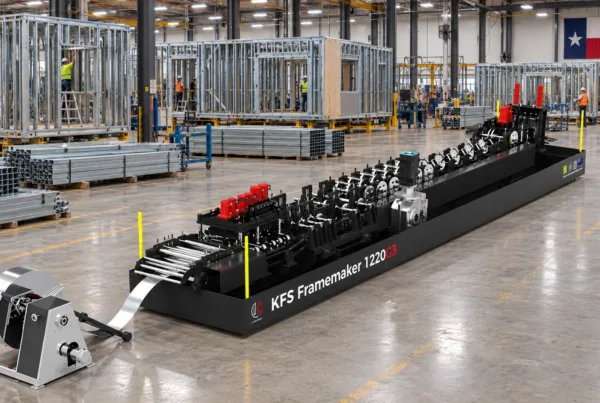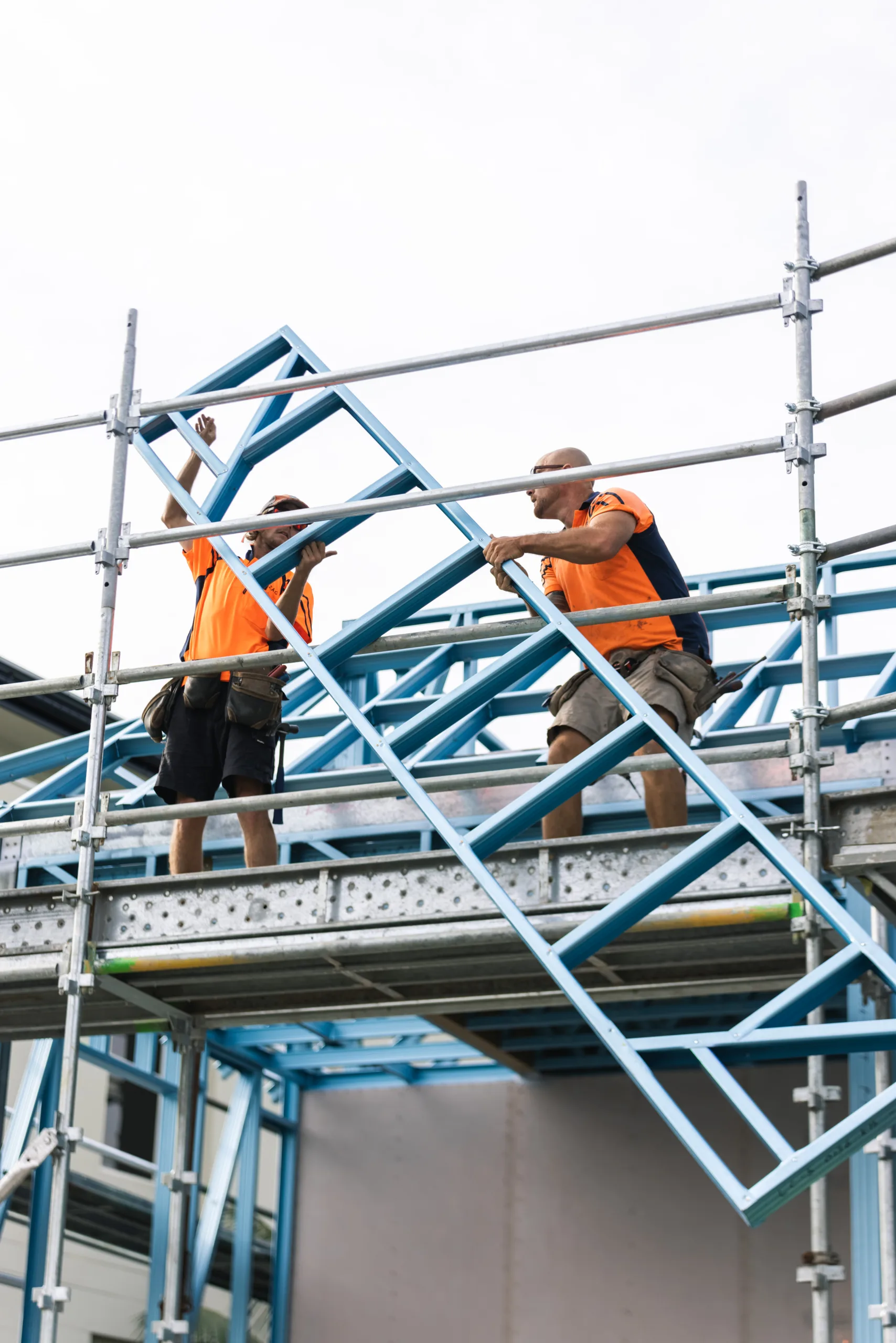
The construction industry continues to face growing pressure from labor shortages, rising costs, and tighter project schedules. As a result, many builders are replacing conventional framing with steel framing manufactured with advanced roll forming technology. Unlike traditional methods that rely heavily on manual work, roll forming steel framing automates much of the production process, helping businesses focus on reducing labor while improving quality and consistency. From steel framing fabrication in the factory to installation on the jobsite, this modern approach is changing how framing projects are delivered.
Conventional Framing vs. Steel Framing
For decades, conventional framing has been the standard construction method for residential, commercial, and larger buildings. Materials are measured, cut, assembled, and adjusted manually, requiring experienced tradespeople throughout the project.
By comparison, steel framing manufactured by roll forming technology produces framing members directly from steel coil using automated equipment. This process delivers consistent steel framing systems that arrive ready for assembly, minimizing manual work while improving efficiency.
What Is Stick Framing?
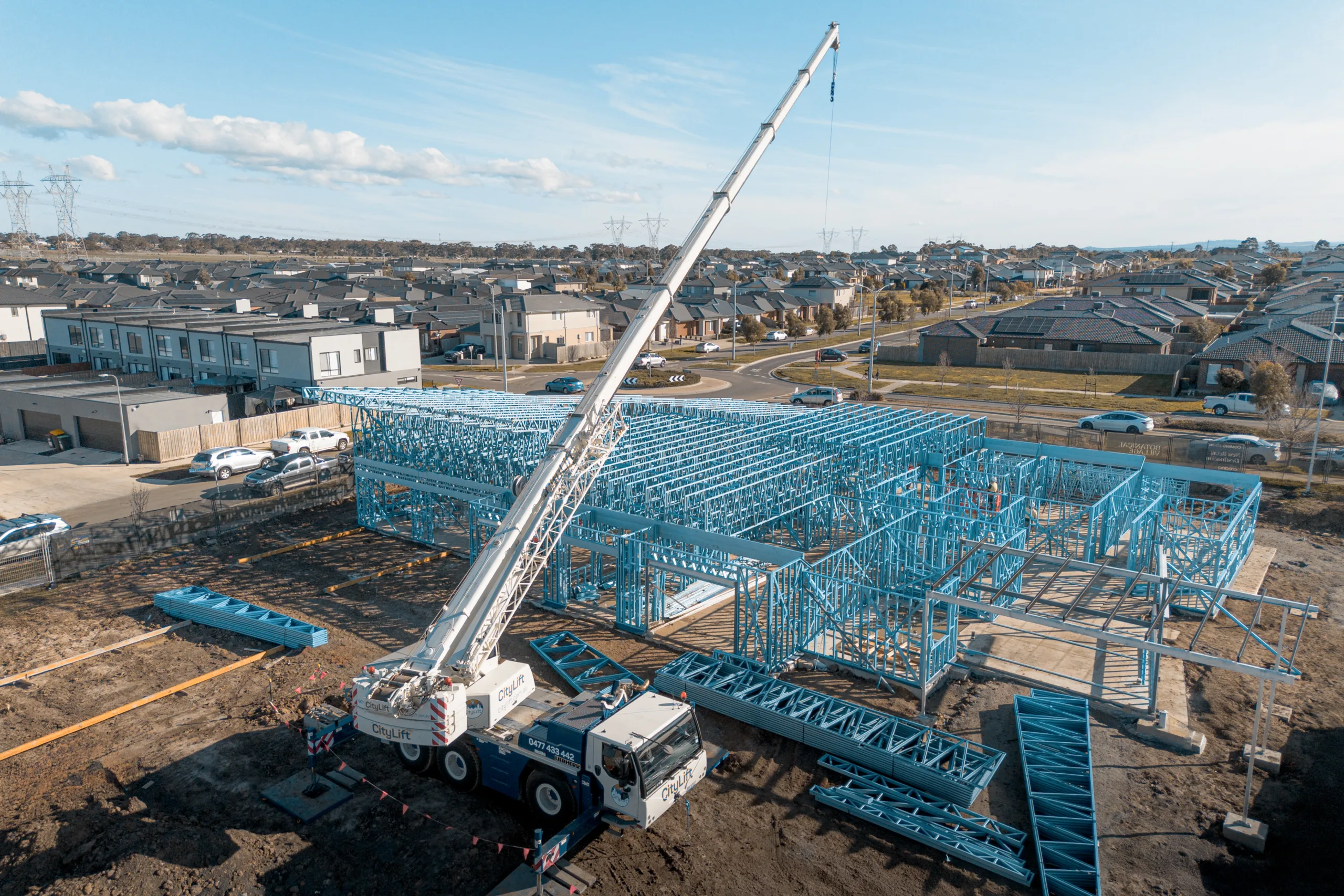
Stick framing is another name for conventional framing, where CFS walls, floors, and roofs are assembled piece by piece on the construction site. Every stud, track, and structural member is individually measured, cut, and installed by the construction crew.
Although this method has been widely used for many years, it depends heavily on skilled labor. As experienced workers become more difficult to find, contractors often experience project delays, inconsistent quality, and increased labor costs.
How Is Stick Framing Different Than Roll Forming Steel Framing?
With roll forming steel framing, framing members are manufactured in a controlled production environment before arriving on site. Design software communicates directly with the machinery, fabricating accurately cut, punched, and labeled components and systems ready for installation.
Instead of manually fabricating every member in the field, steel framing fabrication becomes a repeatable automated manufacturing process. This reduces human error, minimizes material waste, and creates predictable production schedules while supporting reduced labor throughout the project lifecycle.

The Challenges of Maintaining Safety and Structural Integrity
Automated roll forming technology can also contribute to a safer construction process. By shifting measuring, cutting, punching, and other fabrication tasks from the jobsite to automated machinery, workers have less exposure to manual cutting tools, repetitive fabrication tasks, and material handling.
Automated steel framing manufacturing can also contribute to safer buildings by producing consistent steel framing components directly from the approved digital design. Automated roll forming technology helps ensure that critical details, including member dimensions, hole and punch locations, connection points, and component lengths, are produced accurately and consistently across the framing system. This is especially important because even a seemingly small modification made onsite can potentially create a disconnection or weakness in the intended load path resulting in an unknown failure mode.
A building’s structural loads must travel through a continuous, engineered path from the roof and floors through the walls and connections and ultimately into the foundation. When components are altered, incorrectly positioned, or improperly connected in the field, that intended load path may be affected. By manufacturing each member for a specific location and purpose within the structure, automated steel framing fabrication helps ensure the building is assembled as closely as possible to the engineered design. This digital-to-production workflow reduces opportunities for fabrication errors and unnecessary field modifications while providing greater consistency and quality control from design through installation, helping preserve the intended load path and supporting safer, more reliable buildings.
The Challenges of Finding Skilled Labor
One of the biggest challenges facing today’s construction industry is the shortage of qualified workers. Many experienced tradespeople are retiring while fewer new workers are entering the trade and industry. This has made conventional framing increasingly difficult to scale as projects require larger crews to maintain production.
Manufacturers and contractors are turning to advanced roll forming technology because automation allows smaller teams to produce more work with greater consistency. Rather than depending on highly specialized labor for every task, much of the repetitive work is completed by automated equipment.

How Roll Forming Reduces Labor
Offsite – Reducing Labor During Manufacturing
Modern roll forming systems automatically measure, punch, cut, label, and organize framing members directly from digital production files. Instead of multiple manual production steps, one operator can supervise the manufacturing process while the crew assembles the steel framing systems. This significantly contributes to reducing labor while increasing production capacity.
Offsite – Reducing Labor During Steel Framing Fabrication
Automated steel framing fabrication improves efficiency by producing framing members that are ready for assembly. Because every component is manufactured to precise dimensions, fabricators spend less time measuring, reworking, or correcting mistakes. The controlled factory environment also improves inventory management and material utilization while continuing reducing labor throughout production.
Onsite – Reducing Labor During Construction
Once delivered to the jobsite, prefabricated steel framing systems (walls, roofs, and floors) can be assembled much faster than conventional framing. Clearly labeled systems reduce installation errors, simplify sequencing, and allow crews to spend more time assembling rather than modifying materials. Faster installation shortens construction schedules while helping contractors manage ongoing labor shortages.
Real Roll Forming Results and Savings from Our Customers
Our customer, Schmidt Konstruktion Systems Corp. (SKSC), evaluated the performance of projects completed using Scottsdale’s roll forming technology compared with conventional framing methods. Based on a sample 229-square-meter (2465-square-feet) housing unit, SKSC measured significant improvements in both construction time and overall project cost.
According to SKSC’s study:
- Approximately 40% less construction time, with completion reduced from 57 hours using conventional framing to 34 hours using roll forming steel framing; a savings of 23 hours on a project.
- Approximately 16% lower project cost, with costs reduced from ₱166,931 (approximately US$2,745) to ₱139,637 (approximately US$2,296); a savings of ₱27,294 (approximately US$449) on a project.
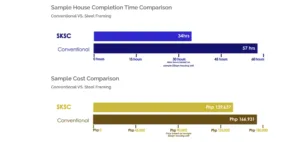
Link to data source: SKSC Research
The chart demonstrates how automation contributes to reducing labor by decreasing both manufacturing and installation time. Less manual work throughout steel framing fabrication and construction translates directly into faster project completion and lower labor costs. While actual project results will vary depending on design, building complexity, crew experience, and local conditions, the comparison illustrates the measurable productivity advantages that automate roll forming steel framing manufacturing can provide.
The 40% reduction in construction time has a significant impact on overall production capacity. In nearly the same amount of time required to fabricate and build one project using conventional framing, a company using automated roll forming steel framing technology could potentially complete almost two comparable projects. This means businesses can significantly increase production capacity without proportionally increasing their workforce, helping them take on more projects, shorten delivery schedules, and generate greater revenue from the same available labor resources, all while staying safe.
Why More Companies Are Choosing Roll Forming Steel Framing
As labor shortages continue across the construction industry, many businesses are evaluating their manufacturing methods that improve productivity and increase safety without sacrificing quality. Roll forming steel framing offers a practical solution by automating repetitive production tasks, improving accuracy, and simplifying installation. From factory-based steel framing fabrication through final construction, the ability to support reducing labor while delivering consistent steel framing systems gives contractors and manufacturers a competitive advantage over conventional framing. As demand for faster, more efficient construction grows, advanced roll forming technology will continue playing an increasingly important role in modern building and construction.
Additional Scottsdale Roll Forming Solutions and Resources
- Blog – Steel Framing Business: Capitalizing on the 2032 Market Growth
- Blog – The Hidden Mechanical Properties of Steel Driving Outstanding Roll Forming
- Blog – Expert Guide to the Rise of LGS Panelization in the Global Market
- Blog – How to Overcome Wood Framing to CFS Framing Conversion
- Blog – Beautiful Custom Premium Homes Built with Roll Forming Technology
- Video – The Hidden Fundamentals of Wood-to-Steel Framing Project Conversions
- Video – New Research Unlocks Greater Heights for Mid-Rise CFS Structures
- Video – Tour a Stunning Steel Framing Factory Operating Scottsdale Technology
- Case Studies
To learn more about Scottsdale’s roll forming solutions and steel framing ecosystem, visit us at www.scottsdalesteelframes.com, call us at +1 (888) 406-2080, or email us at rollformers@scottsdalesteelframes.info.