Modern buildings increasingly rely on cold-formed steel, steel-framed floors, and advanced roll forming technology to deliver precise structural systems. As open layouts and longer spans become common, engineers must carefully evaluate floor vibration to ensure occupant comfort and serviceability. The recently published CFSEI technical note provides engineers with practical methods to analyze vibration behavior in cold-formed steel joist-framed floors.
When steel-framed floors are produced through roll forming, the resulting cold-formed steel members provide predictable stiffness, geometry, and mass. This precision improves the analytical accuracy of vibration models and helps engineers design joist-framed floors that perform well under walking frequencies and other everyday activities.

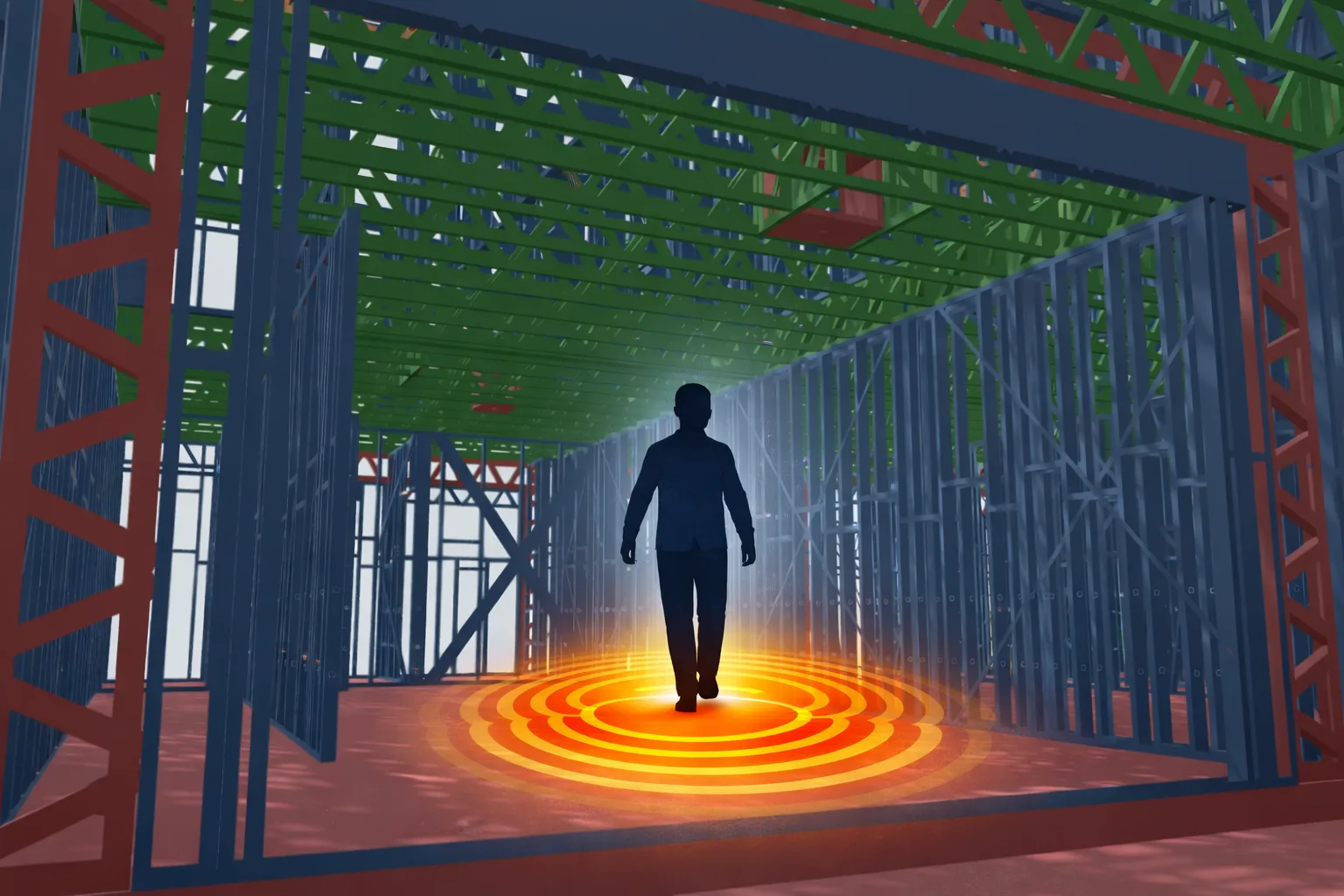
Link to Sketchfab model of Moran St. Townhouses – Steel Framing Development, pictured above, fabricated using Scotpanel 7070 and Scotpanel 7090 roll forming machines.
Types of Cold-Formed Steel Joist-Framed Floors
When evaluating floor vibration in steel-framed floors, engineers typically classify cold-formed steel joist-framed floors into three main systems.
Low-Frequency Steel-Framed Floors
Low-frequency steel-framed floors have natural frequencies typically below about 9 Hz. In these joist-framed floors, resonance from walking can occur if vibration frequencies match the natural frequency of the floor system. To control floor vibration, these cold-formed steel floors often incorporate concrete slabs that increase mass and damping.
High-Frequency Floors with Concrete Slabs
High-frequency steel-framed floors with concrete slabs have natural frequencies above approximately 9 Hz. These joist-framed floors do not experience resonance from walking loads but still require vibration checks based on acceleration limits. The combination of concrete and cold-formed steel joists improves stiffness and mass distribution, reducing floor vibration concerns.
High-Frequency Lightweight Floors
Lightweight joist-framed floors typically consist of cold-formed steel joists combined with lightweight sheathing systems, such as cementitious panels or wood structural panels. These steel-framed floors rely on stiffness and deflection limits to control floor vibration, rather than mass. Engineers often evaluate these floors using natural frequency limits and reference point load deflection criteria.
Vibration Criteria for Steel-Framed Floors
Three primary criteria are used to evaluate floor vibration in cold-formed steel joist-framed floors.
Natural Frequency
Natural frequency represents how quickly a floor vibrates after being disturbed. A higher natural frequency improves vibration performance because the floor responds more stiffly to walking loads. In steel-framed floors, increasing stiffness or reducing span often raises the natural frequency.
Acceleration
Acceleration measures how strongly occupants feel the floor vibration when the floor moves. Even when deflection is small, high acceleration can make joist-framed floors feel uncomfortable or unstable. For many residential and office spaces, acceptable vibration acceleration limits are around 0.5% of gravitational acceleration.
Deflection
Deflection refers to the downward movement of the floor due to loading. For lightweight steel-framed floors, predicted midspan deflection under a reference load is commonly used to determine acceptable floor vibration performance.
Factors Affecting Floor Vibration Performance
Several structural and architectural factors influence floor vibration in cold-formed steel joist-framed floors.
Damping
Damping represents energy loss in a vibrating system. Nonstructural components such as ceilings, mechanical systems, and partitions increase damping and improve floor vibration performance.
Mass
Increasing the mass of steel-framed floors generally reduces vibration amplitude because more force is required to move the system.
Span Length
Longer spans reduce stiffness and natural frequency, increasing the likelihood of noticeable floor vibration.
Support Conditions
Joists supported by walls are stiffer than those supported by beams. Flexible supports can reduce natural frequency and increase vibration response.
Full-Height Partitions
Interior partitions attached between floors provide additional damping and stiffness, significantly improving the vibration behavior of joist-framed floors.
Comparison of Cold-Formed Steel Floor Systems
| Floor System Type | Typical Construction | Typical Natural Frequency Range | Mass | Primary Evaluation Method |
| Wood-Framed Floors | Dimensional lumber or engineered wood joists with plywood or OSB subfloor | ~6–10 Hz (span dependent) |
Low–Moderate | Deflection limits and frequency checks |
| Low-Frequency Steel-Framed Floors | Cold-formed steel joists with steel deck and concrete slab | Below ~9 Hz | High | Acceleration limits |
| High-Frequency Floors with Concrete Slabs | Cold-formed steel joists with composite concrete slab on deck | Above ~9 Hz | High | Acceleration analysis |
| High-Frequency Lightweight Floors | Cold-formed steel joists with cementitious panels or wood structural panels | Above ~8-10 Hz | Low | Frequency and deflection limits |
The table compares four common floor systems and illustrates how mass and stiffness influence floor vibration performance. Wood-framed floors typically have lower mass and stiffness, which can make vibration more noticeable in longer spans and often requires stricter deflection controls to maintain occupant comfort. In contrast, steel-framed floors using cold-formed steel joists offer greater design flexibility and more predictable structural behavior.
Low-frequency steel-framed floors incorporate concrete slabs that add significant mass, helping dampen vibration and improve floor stability. High-frequency floors with concrete slabs benefit from increased stiffness and composite action, resulting in higher natural frequencies and improved vibration performance. Even lightweight steel-framed floors can achieve acceptable vibration performance when designed with appropriate joist depth, spacing, and sheathing systems.
Overall, cold-formed steel floor systems provide engineers with the ability to precisely balance mass and stiffness, making steel-framed floors a reliable and adaptable solution for controlling floor vibration in modern buildings. For more information, refer to the CFSEI Technical Note J200-26: Vibration of Cold-Formed Steel Joist Framed Floors, available for purchase.
Roll Forming and Fabrication of Steel-Framed Floors
The precision of roll forming plays a key role in achieving consistent structural performance in joist-framed floors. Roll forming produces cold-formed steel systems with tightly controlled dimensions, predictable material properties, and repeatable geometry. This consistency allows engineers to confidently model steel-framed floors and evaluate floor vibration using analytical methods such as those outlined in CFSEI guidance.
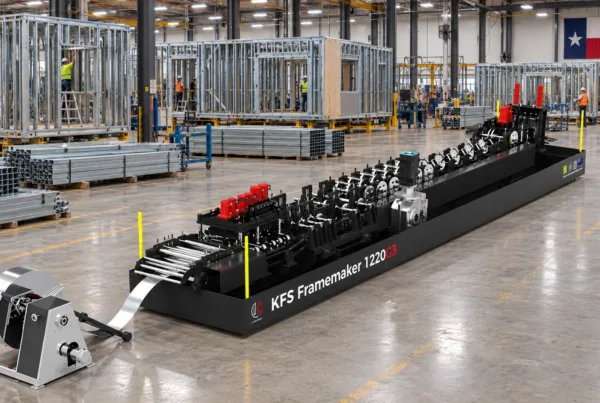
Fabricators using advanced roll forming machines can manufacture floor joists and structural systems required for high-performance floors with minimal variability. Scottsdale’s roll forming solutions are specifically designed to fabricate complete systems for steel-framed floors using cold-formed steel, supporting both residential and commercial building applications.

Why Cold-Formed Steel Performs Well for Floor Vibration
When properly engineered, cold-formed steel offers several advantages for controlling floor vibration in steel-framed floors.
- Consistent material properties from roll forming
- High strength-to-weight ratio
- Precise joist geometry for predictable stiffness
- Compatibility with concrete or lightweight floor assemblies
- Efficient fabrication of joist-framed floors
These benefits allow engineers to design steel-framed floors that meet serviceability expectations while maintaining structural systems.
Vibration in Cold-Formed Steel Joist-Framed Floors
Evaluating floor vibration is a critical part of designing modern steel-framed floors built with cold-formed steel material. By understanding vibration criteria such as natural frequency, acceleration, and deflection, engineers can optimize joist-framed floors for comfort and performance.
Advanced roll forming technology further enhances these systems by delivering precise structural systems that support reliable vibration analysis and predictable structural behavior. As construction continues to adopt longer spans and open floor plans, cold-formed steel and roll forming will remain essential tools for designing efficient, high-performance steel-framed floors.
Additional Scottsdale Roll Forming Solutions and Resources
- Blog – London’s New Steel-Framed Housing Development with Roll Forming Technology
- Blog – Roll Forming: The Best Solution for Acoustic Isolation Requirements
- Blog – Pricing of Wood and Steel Framed Homes Revisited: All You Need to Know
- Blog – Essential Guidelines for Installing Lightweight Steel Framed Floor Joists and Sheet Flooring
- Blog – Fire and Acoustic Ratings in Cold-Formed Steel Assemblies Simplified
- Case Studies – The Chalets at Double Tree by Hilton – MSA Pvt. Ltd., Pakistan
- Case Studies – Aspire Mickleham Childcare Center – Steel Framed Institutional Building
- Financial Services
To learn more about Scottsdale’s roll forming solutions and steel framing ecosystem, visit us at www.scottsdalesteelframes.com, call us at +1 (888) 406-2080, or email us at rollformers@scottsdalesteelframes.info.