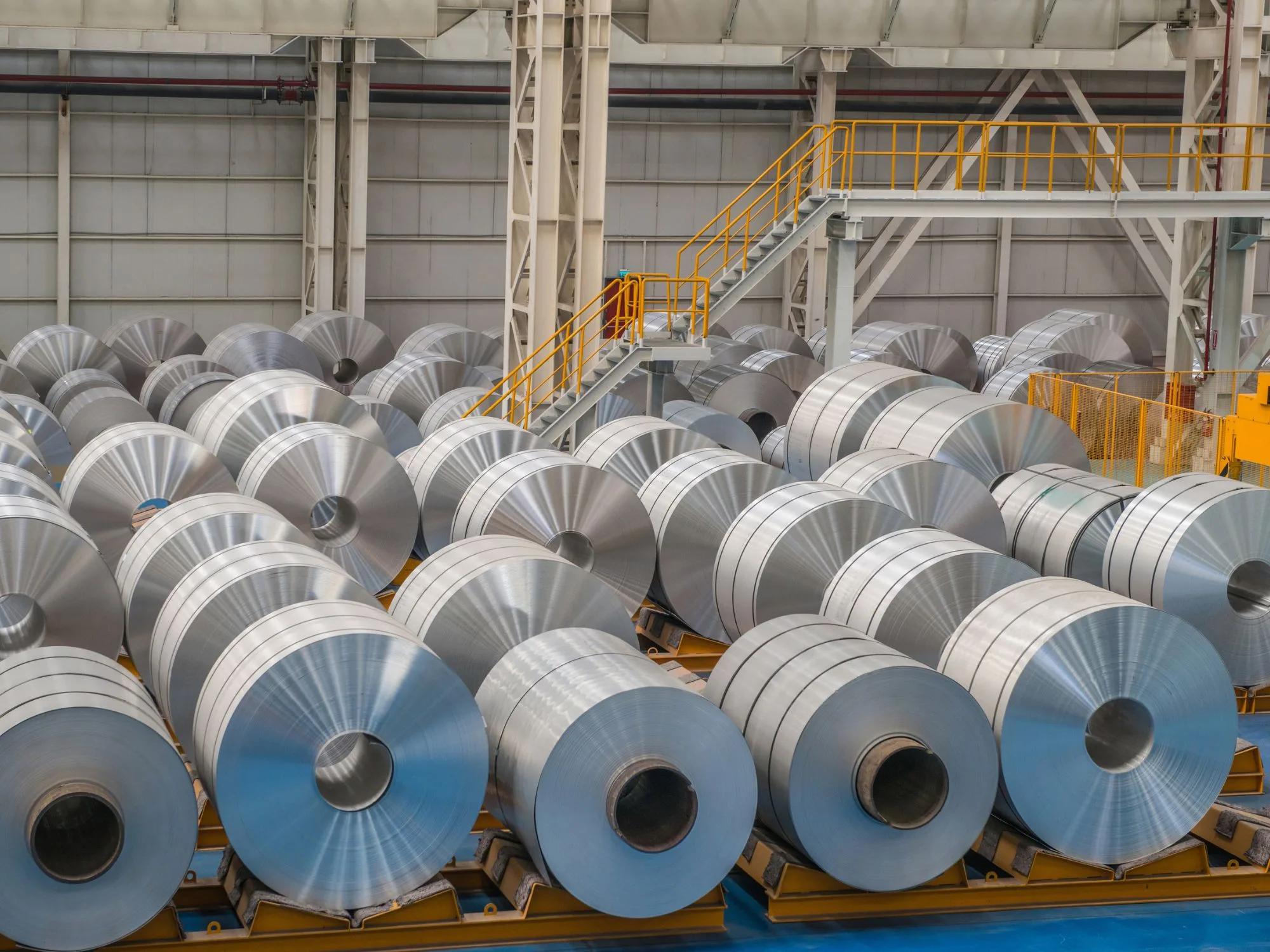
Ordering the right steel coil is one of the most consequential decisions a cold-formed steel (CFS) framing operator can make. Get it right, and your Scottsdale roll forming machine runs smoothly, your frames meet code, and your business earns a reputation for consistent quality. Get it wrong, and the consequences can include non-compliant framing, machine jams, wasted material, costly rework, and in serious cases, structural failures in the finished building.
At Scottsdale Construction Systems, we work with operators across every major construction market in the world — from high-rise fabricators in North America to residential builders in Brazil, from mid-rise commercial contractors in Europe to volume housing producers in Australia and New Zealand. In every region, the same foundational question comes up: How do I order the correct steel coil?
ASTM, EN, and AS/NZ standards are used throughout much of the global markets, including the United States and Canada, Europe, Australia and New Zealand, and South America. Each region operates under different standards, uses different unit systems, and references different specification documents — but the underlying principles are universal. By understanding both the global fundamentals and the local requirements, Scottsdale operators can source coil with confidence, maintain full code compliance, and get the very best performance from their equipment.
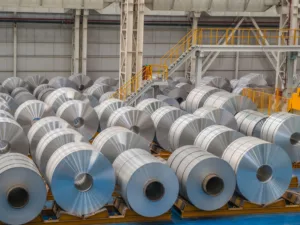
For comprehensive information on coil ordering instructions for Scotpanel, Scottruss, KFS Framemaker, KFD Framemaker, and KSE machines, please consult our comprehensive reference SM2 Steel Coil Ordering Information.
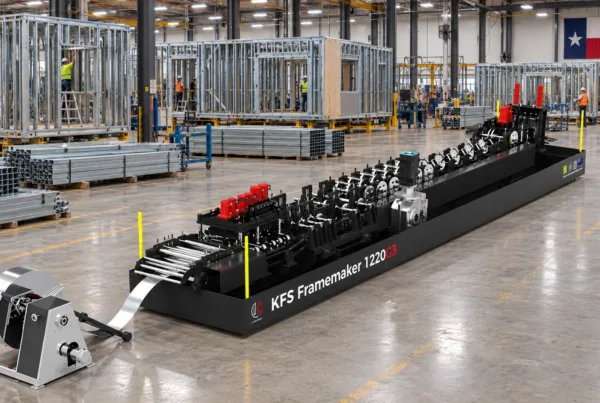
Use our ScotCalc CFS Member Calculator to quickly find the slit coil width for any cold-formed steel profiles produced by our KFS Framemaker 1220, as well as for any other KFS and KFD Framemaker systems.
Want to inquire about coil pricing for your Scottsdale or any other roll forming equipment? Obtain a quote now for standard-compliant, high-quality coil to any location in the world from our Scottsdale Web Store.
The Universal Foundation: The Three G’s
Before diving into regional specifics, every Scottsdale customer — regardless of location — should master the Three G’s: Grade, Gauge, and Galvanization. These three parameters appear in every steel specification standard in the world, though the nomenclature and values differ by region. Every purchase order you write for steel coil must clearly communicate all three.
Grade — Defining Steel Strength
Grade refers to the yield strength of the base metal. Yield strength is a minimum — the steel must meet or exceed it at every point across the full width and length of the coil. There is no downward tolerance on this number. If your order calls for a Grade 50 (50 ksi / 345 MPa) steel and the mill delivers material that yields at 45 ksi at any location, the coil is non-conforming and must be rejected.
Higher grades allow designers to use thinner material while maintaining structural performance, which is why Scottsdale’s high-strength Scotpanel and Scottruss lines support grades all the way up to G550 (550 MPa / ~80 ksi). Understanding the grade your structural engineer has specified is the starting point for every coil order.
Gauge — Steel Thickness and the Base Metal Thickness Rule
Gauge — or thickness — is the most technically nuanced of the Three G’s, and it is the one most often misunderstood. There are two thickness values that matter in CFS framing:
Design Thickness is the value used in structural calculations and tabulated in design standards such as AISI S100. It represents the theoretical thickness of the member profile.
Base Metal Thickness (BMT) is the actual uncoated thickness of the raw steel before any galvanizing coating is applied. This is the number that must appear on your purchase order and on the mill certificate. It is an absolute minimum — unlike dimensional tolerances that allow plus-or-minus variation, BMT has zero downward tolerance. At no point along the full length of the coil, and at no point across the full width, can the base metal fall below the specified minimum. As the SFIA Technical Bulletin on Steel Coil Procurement makes clear, this applies across the entire coil, with the only exception being a minimum 3/8-inch (approximately 10 mm) edge distance from the main coil edge per ASTM A924.
The relationship between design thickness, BMT, gauge designations, mils, and millimeters can be confusing because different standards in different regions use different conventions. Scottsdale’s SM2 Steel Coil Ordering Information document (V2025.3) provides a clear conversion table covering mils, millimeters, inches, and gauge numbers that every operator should keep at hand. For example, a 33-mil designation equals 0.879 mm BMT, while a 27-mil designation equals 0.719 mm BMT.
Coil Width is the third thickness-adjacent parameter to specify. Because different Scottsdale roll former models produce different profile sizes at different material thicknesses, the required coil width varies with every combination of machine, profile, and gauge. Always use Scottsdale’s machine-specific coil width tables from the SM2 document when placing your order — do not estimate or use round numbers.
Galvanization — Corrosion Protection and Coating
Galvanization is the third and arguably most environment-dependent of the Three G’s. Without adequate corrosion protection, CFS structures can suffer reduced lifespan, structural weakening, and costly repairs — particularly in coastal, high-humidity, or industrial settings. Zinc-coated steel works through three complementary mechanisms: barrier protection (the coating physically isolates the steel from moisture and oxygen), cathodic (sacrificial) protection (zinc corrodes preferentially to steel, so even if the coating is scratched or cut, the zinc nearby continues to protect the exposed base metal), and a self-healing zinc patina that forms over time, gradually sealing minor surface damage.
The coating weight must be specified explicitly in every purchase order. Common designations include G60 and G90 in North America (measured in oz/ft²), Z275 in Europe and Australia (measured in g/m²), and AM150 or AZ150 (aluminum-zinc alloy, sometimes marketed as Zincalume® or Galvalume®) in Australia and increasingly worldwide. The numerical value directly represents zinc mass: G90 carries 0.90 oz/ft² total zinc on both sides, while Z275 carries 275 g/m² — these two are roughly equivalent, and both provide approximately 19–20 microns of zinc per side.

The choice of coating weight depends on your project environment. As Scottsdale’s Informative Guide to Corrosion Resistance of Steel Framing explains, G60 (or equivalent Z180) is appropriate for interior, dry, protected environments such as commercial fit-outs and modular units shielded from moisture, while G90 (or equivalent Z275) is the minimum recommended specification for exterior walls, roofing systems, or projects near coastal or industrial regions where humidity, salt, or pollutants accelerate corrosion. For a deeper dive into how coating levels compare across global standards and how they translate to real-world service life, Scottsdale’s The Importance of Galvanization in Cold-Formed Steel: Fundamentals to Know is essential reading.
Z vs. AZ Coatings — An Important Distinction: The Z designation (e.g., Z275) refers to pure zinc coatings, which provide excellent sacrificial protection at cut edges and scratches. The AZ designation (e.g., AZ150 or AM150) refers to 55% aluminum-zinc alloy coatings (Zincalume/Galvalume), which offer superior barrier protection due to a more stable aluminum oxide layer — often delivering 2 to 4 times longer atmospheric service life than an equivalent zinc coating. However, AZ coatings provide less sacrificial protection at exposed cut edges. The right choice depends on your environment, local standard, and structural engineer’s specification. All five families of Scottsdale roll forming machines — Scotpanel, Scottruss, KFS Framemaker, KFD Framemaker, and KSE — process both Z and AZ coated coils seamlessly.
The following global equivalence table is useful when cross-referencing coating designations across markets:
| G Designation (oz/ft²) | Approx. Equivalent Z Designation (g/m²) | Thickness per Side |
| G40 (0.40 oz/ft²) | Z120 | ~0.34 mils / 8.4 µm |
| G60 (0.60 oz/ft²) | Z180 | ~0.51 mils / 12.6 µm |
| G90 (0.90 oz/ft²) | Z275 | ~0.77 mils / 19.3 µm |
| G115 (1.15 oz/ft²) | Z350 | ~0.98 mils / 24.5 µm |
It is equally important to specify whether the coil should be oiled or unoiled, and what surface finish (regular spangle, spangle-free) is required. For most Scottsdale roll forming applications, unoiled, spangle-free coil is recommended. One additional benefit of using advanced Scottsdale roll forming equipment: the precision of the forming process preserves the zinc layer throughout cutting, dimpling, and punching operations — ensuring that every finished CFS member carries its full corrosion protection intact from coil to completed frame.
Market-by-Market Guide – United States and Canada
A. Governing Standards
Cold-formed steel framing in the US and Canada is governed by a tightly integrated family of standards:
- ASTM A1003 — the code-referenced specification for sheet steel used in CFS framing. This is the primary ordering document. Section 5 of ASTM A1003 defines all required ordering information, including base steel thickness, grade and type, coating type, oiling, dimensions, coil size, and certification requirements.
- ASTM A653 — the specification for zinc-coated (galvanized) and zinc-iron alloy-coated (galvannealed) sheet steel. This document defines the coating classes (G60, G90, etc.) and provides detailed requirements for the hot-dip galvanizing process.
- ASTM A924 — general requirements for metallic-coated sheet steel, including edge distance requirements for thickness measurement.
- AISI S100 — the North American Specification for the Design of Cold-Formed Steel Structural Members. This defines design thicknesses and lists acceptable steels.
- AISI S220 — the North American Standard for Cold-Formed Steel Nonstructural Framing. Even when using secondary or excess steel, this standard requires full compliance with ASTM A1003.
- AISI S240 — the North American Standard for Cold-Formed Steel Structural Framing.
- SFIA Code Compliance Certification Program (CCCP) — Scottsdale’s Scotpanel and Scottruss products are produced by certified SFIA manufacturers. The SFIA CCCP defines quality assurance requirements for CFS framing manufacturers, including unannounced audits and sample testing of yield strength, tensile strength, elongation, BMT, and coating.
 B. Units and Grade Designations
North American steel coil is ordered in imperial units. Thickness is expressed in mils (thousandths of an inch) or gauge, yield strength in ksi (kilopounds per square inch), coating weight in oz/ft².
Common grade designations for Scottsdale machines under ASTM A653 include:
- SS Grade 33 (33 ksi / 228 MPa yield): Standard nonstructural applications, interior non-load-bearing walls. Type designation “NS33.”
- SS Grade 50 Class 1 (50 ksi / 345 MPa yield): Structural framing, mid-rise and load-bearing applications. Type designation “ST50H.”
- SS Grade 60 (60 ksi / 414 MPa yield): Heavier structural applications.
- SS Grade 70 (70 ksi / 483 MPa yield): High-load structural applications.
- SS Grade 80 Class 1 (80 ksi / 552 MPa yield): Heavy-duty structural, available on SS designation only.
Note that if HSLAS or HSLAS-F designation is used rather than SS, the minimum tensile strength changes — for example, Grade 50 HSLAS has Fu = 60 ksi rather than the 65 ksi of SS Grade 50 Class 1.
C. Scottsdale Machine Specifications (Imperial)
Scotpanel (5-series and 7-series): The Scotpanel 5090 requires a coil width of 7.55 inches and accepts thicknesses from 22 gauge down to 18 gauge across grades 33 through 80 Class 1. The 5140 uses a 9.60-inch coil width. The 7-series machines range from 5.63 inches (7063) to 8.81 inches (7140) coil width, depending on model.
Scottruss: The Scottruss 6050 uses a 6.81-inch coil and handles 24- through 18-gauge material. The Scottruss 6075, designed for heavier truss applications, uses an 8.81-inch coil and handles 20- through 16-gauge material.
Knudson by Scottsdale KFD 2025 (non-structural): The KFD Framemaker handles non-structural profiles from 33 ksi steel in thicknesses of 18, 27, and 30 mils. Coil widths range from approximately 4.37 inches (162S125 stud at 30 mils) to approximately 10.03 inches (600T200 track at 30 mils) depending on profile.
Knudson by Scottsdale KFS Framemaker (structural, 1218 / 1420 / 1622): The KFS series handles structural grades of 33, 50, and 60 ksi. Coil widths are profile- and thickness-dependent; for example, a 600S200 stud on the KFS 1218 at 43-mil material requires an 10.83-inch coil. The KFS 1622 at 27-mil material for a 350S162 stud requires a 7.46-inch coil. Always refer to the SM2 document tables for exact values.
Note: The KFD and KFS Framemaker series support a maximum grade of 65 ksi yield strength (450 ksi ultimate) in the North American context.
D. Coating Requirements
For typical structural applications in North America, G90 coating (0.90 oz/ft² total, both sides combined) is the standard specification for exterior and structurally exposed applications. G60 is acceptable for interior, dry, protected environments. G40 is the lightest coating and is appropriate only for non-structural interior framing that will never be exposed to moisture.
As Scottsdale’s Informative Guide to Corrosion Resistance of Steel Framing explains, G90 delivers roughly 50% more zinc than G60, directly improving corrosion resistance and extending the service life of CFS members. For projects near coastal or industrial regions — where humidity, salt spray, or pollutants accelerate corrosion — G90 is the minimum. In particularly harsh conditions, such as properties within 300 feet of the ocean or in high-humidity industrial environments, consult your structural engineer about whether even heavier coatings (equivalent to Z350 or Z450) or AZ (aluminum-zinc alloy) coatings may be warranted. For a comprehensive breakdown of how coating levels translate to real-world expected service life across different environments, see Scottsdale’s The Importance of Galvanization in Cold-Formed Steel: Fundamentals to Know.
For AZ50 (Galvalume/aluminum-zinc alloy, governed by ASTM A792 rather than ASTM A653): this coating offers superior barrier protection compared to equivalent pure zinc coatings and is gaining traction for exterior CFS applications. Consult with your structural engineer and local building authority, as AZ coatings require different design treatment than pure zinc coatings, particularly at cut edges where sacrificial protection is reduced.
E. Critical Ordering Checklist for US/Canada
When placing a coil order for your Scottsdale machine in the US or Canadian market, your purchase order should specify:
- ASTM A1003 as the governing specification
- ASTM A653 for coating requirements
- Steel type designation (SS, HSLAS, or HSLAS-F)
- Grade (33, 50 Class 1, 60, 70, or 80 Class 1)
- Base Metal Thickness (in mils) — not coated thickness
- Coil width (in inches, from SM2 table for your specific machine and profile)
- Coating class (G60, G90, or AZ50/AZM150)
- Oiling: Not oiled
- Surface finish: Spangle-free preferred
- Mill certification, including heat analysis and mechanical property test report
- Traceability documentation (heat/coil number, required for SFIA CCCP and IBC compliance)
F. A Note on Secondary Steel in North America
Secondary or excess steel — material produced above normal volumes or with minor variances from prime — can be a cost-saving option. However, AISI S220 is unambiguous: secondary steel must still comply fully with ASTM A1003. All the same minimum thickness, yield strength, tensile strength, elongation, and coating requirements apply. If you cannot obtain a full mill certificate traceable to a specific heat number, do not use the material for code-compliant CFS framing.
The SFIA Technical Bulletin on Steel Coil Procurement (Vol. 4, No. 2, February 2025) provides practical guidance on verifying secondary steel and maintaining proper documentation. Scottsdale strongly recommends that all US and Canadian operators download this free resource from steelframing.org.
Market-by-Market Guide – Europe
A. Governing Standards
European cold-formed steel framing and its raw material inputs are governed by:
- EN 10346:2015 — the primary European standard for continuously hot-dip coated steel flat products. This is the coil specification standard. Section 5 of EN 10346:2015 defines ordering requirements in detail, distinguishing between mandatory and optional information.
- EN 10143 — the dimensional standard referenced for tolerances on sheet and strip.
- Eurocode 3, Part 1-3 (EN 1993-1-3) — Design of steel structures: cold-formed thin gauged members and sheeting. This defines acceptable steels and design requirements.
- EN 1090 — Execution of steel structures and aluminium structures, relevant for structural fabrication.

B. Units and Grade Designations
European steel coil is ordered in metric units. Thickness is in millimeters (BMT), yield strength in MPa, and coating mass in g/m².
The steel grade naming convention under EN 10346 uses a structured designation, for example S350GD+Z, which means:
- S — structural steel
- 350 — minimum yield strength in MPa
- GD — hot-dip coated
- +Z — zinc coating (galvanized)
- Alternatively, +ZF for zinc-iron (galvannealed), +ZA for zinc-aluminum, +AZ for aluminum-zinc (Zincalume/Galvalume)
Common grades used in Scottsdale equipment across Europe:
- S350GD+Z (350 MPa yield, 420 MPa tensile): The most common structural grade for wall stud, track, and truss applications.
- S450GD+Z (450 MPa yield, 480 MPa tensile): Higher-strength applications, longer spans, heavier loads.
Note that S450GD+Z at 1.15 mm thickness is supported only on Scottruss roll formers. For Scotpanel, the maximum thickness for S450GD+Z is 0.95 mm; at 1.15 mm, S350GD+Z must be used on Scotpanel machines.
C. Coating Requirements Under EN 10346
The standard zinc coating designation for European structural CFS framing is Z275, representing 275 g/m² total coating mass (both sides combined). This is broadly equivalent to the North American G90 class. Z275 is the minimum recommended for structural studs, tracks, and trusses in moderate European environments (Eurocode corrosion class C2–C3). For more aggressive environments — coastal, industrial, or high-humidity locations — Z350 or Z450 should be considered. In particularly corrosive marine environments (C4–C5), ZM (zinc-magnesium) coatings available under EN 10346 can offer enhanced protection, particularly at cut edges.
For European projects, it is also worth noting the distinction between Z (pure zinc), ZA (zinc-aluminum), ZM (zinc-magnesium), and AZ (aluminum-zinc alloy) coatings — all available under EN 10346. For a detailed explanation of how these coating families compare in real-world performance, including a service life table by environment, see Scottsdale’s The Importance of Galvanization in Cold-Formed Steel: Fundamentals to Know.
For ordering purposes, you must also specify:
- Coating finish (J): N = Normal spangle (standard); specify if spangle-free required
- Surface quality (K): A = As-coated, B = Improved, C = Best quality
- Surface treatment (L): C = Chemical passivation (standard)
Mandatory vs. Optional EN 10346 Ordering Information
EN 10346 distinguishes between mandatory and optional information. Mandatory items include quantity, product type (strip/sheet/cut length), the EN 10143 dimensional standard, dimensions, steel name/number, coating designation (e.g., Z275), coating finish (N), and surface quality. Optional items include special surface roughness, custom coating masses, or requirements for coil-break-free material.
For Scottsdale operators in Europe, we recommend specifying Z275 coating, N spangle finish, surface quality B or C for consistent roll forming performance, and chemical passivation (C). Do not specify oiling.
D. Scottsdale Machine Specifications (Metric — EN 10346)
Scotpanel: Coil widths for European-market Scotpanel machines are identical to the AS 1397 metric tables in the SM2 document. For example, the 5090 uses a 192 mm coil, the 5140 uses 244 mm, and the 7-series ranges from 143 mm (7063) to 224 mm (7140). Material thicknesses of 0.55, 0.75, 0.95, and 1.15 mm are supported.
Scottruss: The 6050 uses a 173 mm coil, while the 6075 uses 224 mm. The 6075 supports S450GD+Z at 0.95 mm only; at 1.15 mm, only S350GD+Z is used.
KFD and KFS Framemaker: Both the KFD and KFS series under EN 10346 use S350GD+Z and S450GD+Z grades. The Knudson machines have a maximum supported grade of 450 MPa yield / 520 MPa ultimate under this standard. Coil width tables in the SM2 document apply fully.
E. South and Eastern European Considerations
While EN 10346 and the Eurocode framework apply across EU member states, operators in countries such as Turkey, the United Kingdom (post-Brexit), Ukraine, or the Balkans should verify which version of EN 10346 or equivalent national standard applies locally. The UK largely retained the EN standards framework after Brexit under BS EN designations. Turkey references the EN framework while also maintaining national TS standards. Always confirm with your local building authority which specific edition of the standard is code-incorporated in your jurisdiction.
F. Critical Ordering Checklist for Europe
- EN 10346:2015 as governing specification
- EN 10143 for dimensional tolerances
- Steel name/grade (e.g., S350GD+Z or S450GD+Z)
- Base Metal Thickness in mm (BMT)
- Coil width in mm (from SM2 table)
- Coating mass: Z275
- Coating finish: N (normal spangle) or spangle-free if required
- Surface quality: B or C
- Surface treatment: C (chemical passivation)
- No oiling
- Test certificate (mandatory — specify inspection document type required)
Market-by-Market Guide – Australia and New Zealand
A. Governing Standards
Australia and New Zealand operate under a closely harmonized standards framework:
- AS 1397:2021 (superseding AS 1397:2011) — the primary standard for continuously hot-dip metallic-coated and pre-painted steel flat products. This is the coil specification document for the Australian/NZ market.
- AS/NZS 4600:2018 — the design standard for cold-formed steel structures (the regional equivalent of AISI S100/Eurocode 3).
- AS/NZS 4600 Supplement 1 — commentary and additional guidance.
- NASH Standard — National Association of Steel-Framed Housing (NASH) standards, widely referenced for residential and light commercial CFS framing in Australia and New Zealand.

B. Units and Grade Designations
Australia and New Zealand use metric units. Thickness in mm (BMT), yield strength in MPa, coating mass in g/m².
The AS 1397 grade naming convention combines grade and coating, for example, G550 Z275:
- G550 — 550 MPa minimum yield strength
- G350 — 350 MPa minimum yield strength
- G450 — 450 MPa minimum yield strength (available for heavier structural applications on KFD/KFS)
- Z275 — 275 g/m² zinc coating
- AM150 — 150 g/m² aluminum-zinc (Zincalume) coating
The AS 1397 framework features the notably high-strength G550 grade, which is widely used in Australia and New Zealand for thin-gauge structural framing. This material (typically 0.55 mm, 0.75 mm, and 0.95 mm BMT) provides excellent structural performance in lightweight wall and roof framing applications. At 0.55 mm thickness, G550 has a minimum yield of 413 MPa and a minimum tensile of 413 MPa (note the reduced ductility for this very thin gauge). At 0.75 mm and above, G550 develops the full 550 MPa yield and 550 MPa tensile.
G350 is used for heavier gauges (0.75 mm through 1.55 mm) requiring higher ductility, such as in truss chord members and structural framing, where elongation requirements are critical.
C. Scottsdale Machine Specifications (AS 1397, Metric)
Scotpanel: Australian and New Zealand Scotpanel operators work with BMT values of 0.55, 0.75, 0.95, and 1.15 mm across G550 and G350 grades. Coil widths are profile-dependent:
- Scotpanel 5090: 192 mm wide coil
- Scotpanel 5140: 244 mm wide coil
- Scotpanel 7063: 143 mm wide coil
- Scotpanel 7070: 153 mm wide coil
- Scotpanel 7076: 156 mm wide coil
- Scotpanel 7090: 173 mm wide coil
- Scotpanel 7140: 224 mm wide coil
- Scotpanel 8140: 244 mm wide coil
Scottruss:
- Scottruss 6050: 173 mm wide coil — G550 from 0.55 mm, G350 from 0.75 mm to 1.15 mm
- Scottruss 6075: 224 mm wide coil — G500 at 1.15 mm, G350 from 0.95 mm to 1.55 mm
Note the G500 designation for the Scottruss 6075 at 1.15 mm — this is a heavier-duty grade (500 MPa yield, 520 MPa tensile) available in Australia.
KFD Framemaker 2025 (non-structural): Supports G350 grade in thicknesses of 0.48, 0.72, and 0.88 mm for non-structural profiles. Coil widths range from 111 mm (162S125 stud) to 256 mm (600T200 track).
KFS Framemaker (structural): The KFS series in Australia supports G350 and G450 grades, with thicknesses from 0.48 mm (very light nonstructural) to 2.58 mm (heavy structural). Note that G450 at 1.44 mm, 1.81 mm, and 2.58 mm is available for the heaviest structural applications. The maximum supported grade is 450 MPa yield / 520 MPa ultimate on KFD and KFS machines.
Always refer to the AS 1397 Appendix A for correlation of grade designations with BMT values, and use the SM2 document coil width tables for exact dimensions.
D. Coating Requirements for Australia/NZ
Australia and New Zealand offer the broadest range of coating options in the CFS market, reflecting the diversity of the continent’s environments — from arid inland regions to severe coastal and tropical zones.
Z275 (zinc, 275 g/m²) is the standard for structural framing in moderate environments — typically sites more than 1 km from the coast and away from aggressive industrial exposure. It is broadly equivalent to G90 in North America.
AM150 (aluminum-zinc alloy / Zincalume®, 150 g/m²) is the dominant coating in Australian residential construction. Despite the lower nominal coating mass, the aluminum content provides superior barrier protection, often outperforming Z275 in atmospheric service life — especially in moderate coastal and tropical environments. AM150 Zincalume is the Bluescope Lysaght specification. Note that soldering of aluminum-zinc coated material is not practicable, as noted in AS 1397.
For sites in more aggressive environments (within 100–500 m of surf coast, or in heavy industrial areas), Z350 or Z450 should be considered. In very severe coastal or tropical marine environments (corrosion categories C4–C5 per AS/NZS ISO 9223), Z450 provides substantially longer service life before first maintenance.
The following indicative service life table gives a useful framework when selecting coating for Australian and New Zealand projects:
| Coating | Inland/Benign | Moderate Coastal (1–10 km) | Harsh Coastal (<1 km) | Tropical/Industrial |
| Z275 | 50–100+ years | 20–40 years | 10–20 years | 15–30 years |
| Z350 | 75–100+ years | 30–50 years | 15–30 years | 20–40 years |
| AM150 | 75–100+ years | 30–60 years | 15–35 years | 25–50 years |
| Z450 | 100+ years | 40–75 years | 20–40 years | 30–60 years |
For a comprehensive discussion of coating selection by environment, including the science behind how zinc and aluminum-zinc coatings protect CFS members, see Scottsdale’s The Importance of Galvanization in Cold-Formed Steel: Fundamentals to Know. For practical guidance on choosing between G60-equivalent and G90-equivalent coatings for specific project types, the Informative Guide to Corrosion Resistance of Steel Framing provides a concise decision framework.
Surface Finish for Australia/NZ
Under AS 1397, specify:
- Regular spangle (R) — standard finish
- Spangle-free (f) — recommended for most roll forming applications to ensure consistent surface quality
E. Critical Ordering Checklist for Australia/NZ
- AS 1397:2021 as governing specification
- Product type: Coil strip
- Grade designation (e.g., G550, G350, G450, G500)
- Coating class: Z275 or AM150
- Surface finish: Spangle-free (f) recommended
- Base Metal Thickness in mm (BMT) — from SM2 document tables
- Coil width in mm — from SM2 tables for your specific machine and profile
- Test certificate: Yes — specify frequency
- Inspection: Specify if the purchaser will inspect at manufacturer’s work
- Quantity in tonnes with delivery schedule
For comprehensive information on coil ordering instructions for Scotpanel, Scottruss, KFS Framemaker, KFD Framemaker, and KSE machines, please consult our comprehensive reference SM2 Steel Coil Ordering Information.
Use our ScotCalc CFS Member Calculator to quickly find the slit coil width for any cold-formed steel profiles produced by our KFS Framemaker 1220, as well as for any other KFS and KFD Framemaker systems.
Want to inquire about coil pricing for your Scottsdale or any other roll forming equipment? Obtain a quote now for standard-compliant, high-quality coil to any location in the world from our Scottsdale Web Store.
Market-by-Market Guide – South America
A. Overview of the South American Market
South America presents a diverse regulatory landscape. Unlike the three other regions covered in this guide — each of which has a dominant unified standard — South America is a mosaic of national standards with varying degrees of harmonization to international frameworks. The good news for Scottsdale operators is that most South American countries base their CFS framing requirements on ASTM standards or on national standards that are closely derived from ASTM, EN, or ISO frameworks.
Brazil
Brazil is the largest construction market in South America and has the most developed national standards framework for CFS framing:
- ABNT NBR 15253:2014 — the Brazilian standard for cold-formed steel profiles for civil construction (profiles formed from coated flat steel). This standard references coated steel produced in accordance with ABNT NBR 7008 (equivalent to ASTM A653 family standards).
- ABNT NBR 6355 — standard profiles for cold-formed steel structural members.
- ABNT NBR 14762 — design of cold-formed steel structures (closely modeled on AISI S100).
For steel coil procurement in Brazil, operators should order to ABNT NBR 7008, specifying zinc coating class, grade designation, and BMT. Grade designations in Brazil closely parallel the ASTM system. The common structural grade is ZAR 345 (approximately equivalent to Grade 50 ksi / 345 MPa), and high-strength coil is designated ZAR 550 (approximately equivalent to G550 / 550 MPa). Coating designations follow the Z-system (e.g., Z275 for 275 g/m²), harmonized with the ISO/EN convention.
For Scottsdale operators in Brazil, use the metric ASTM A653M tables in the SM2 document as your primary reference for coil widths and thicknesses, as the Brazilian standard and A653M share the same metric unit framework and grade levels.
Argentina
Argentina’s CFS framing sector references:
- CIRSOC 303 — Argentine structural steel specification, which incorporates cold-formed steel members.
- IRAM national standards for steel products, with ASTM standards frequently cited as technical reference in practice.
Argentine operators typically specify steel coil using ASTM A653M as the technical basis, verifying with their structural engineer that the CIRSOC 303 equivalent grade is satisfied. Metric units are standard.
Chile
Chile has adopted a seismic-resistant construction framework that references both ASTM and ISO standards. The relevant national standard is NCh 2369 for seismic design of industrial structures, and steel product specifications follow ASTM-equivalent national standards. Many Chilean CFS operators order coil directly to ASTM A653M on the basis that Chilean national steel standards are closely aligned.
Colombia, Peru, Ecuador, and Other Andean Nations
Across the Andean region, building codes and material standards increasingly reference ASTM as the baseline for structural steel specifications. The Colombian Technical Standards (NTC) for structural steel are aligned with ASTM A36 and ASTM A572 for primary steel; for CFS framing, ASTM A653M is the practical reference. Peru’s Reglamento Nacional de Edificaciones and Ecuador’s NEC (Norma Ecuatoriana de Construcción) both permit ASTM-standard material when local equivalent standards do not specifically address CFS framing coil.
B. Practical Guidance for South American Scottsdale Operators
Given this diversity, Scottsdale recommends a practical two-step approach for South American operators:
Step 1 — Verify the local governing code. Confirm with your structural engineer and local building authority which national standard applies in your jurisdiction and whether ASTM A653M (or the national equivalent) is acceptable as the material specification basis.
Step 2 — Order to ASTM A653M (metric). In the absence of a superseding national standard, ordering coil to ASTM A653M covers all critical parameters — yield strength, base metal thickness, coating class, and certification requirements — and provides a documented, internationally recognized specification trail. Use the Section IV (ASTM A653M — Metric) tables in the SM2 document for all coil width and thickness specifications for your Scottsdale machine.
Common Grade Equivalences for South America
| Region | Common Grade | Approx. Yield (MPa) | ASTM A653M Equivalent |
| Brazil | ZAR 230 | 230 | Grade 33 (230 MPa) |
| Brazil | ZAR 345 | 345 | Grade 50 (340 MPa) |
| Brazil | ZAR 550 | 550 | Grade 80 Class 1 (550 MPa) |
| Argentina/Chile | (ASTM basis) | 230–550 | A653M SS Grades |
| Andean region | (ASTM basis) | 230–410 | A653M SS Grades |
C. Decoiler Compatibility for South American Operations
Many South American operators work with coil sourced from regional steel mills in Brazil (Usiminas, CSN, Gerdau), Argentina (Ternium), or imported from Asia. Coil dimensions may vary. Scottsdale’s decoiler specifications accommodate a wide range:
- Light-duty decoiler: 114–244 mm coil width, up to 1,500 kg capacity
- Medium-duty decoiler: Up to 610 mm coil width, 2,041 kg or 2,948 kg capacity
- Heavy-duty decoiler: Up to 610 mm coil width, up to 4,535 kg capacity
All medium and heavy-duty decoilers are compatible with Scottsdale Scotpanel, Scottruss, and Knudson KFD and KFS Framemaker roll formers. Coil inside diameter must be within a 400–530 mm range, depending on decoiler model; maximum outside diameter is 1,524–1,525 mm. Confirm coil ID and OD at time of ordering to ensure compatibility with your specific decoiler.
D. Critical Ordering Checklist for South America
- Confirm the applicable national standard with the structural engineer
- Use ASTM A653M as the technical basis where no superseding national standard exists
- Specify Base Metal Thickness (BMT) in mm from SM2 document tables
- Specify coil width in mm from SM2 document tables for your specific machine and profile
- Grade: SS Grade equivalent (230, 340, 410, 480, or 550 MPa depending on application)
- Coating: Z275 (galvanized, 275 g/m²) as minimum for structural applications
- Unoiled, spangle-free
- Mill certificate in metric units, including heat analysis and mechanical property test report
- Coil ID: 400–520 mm; Coil OD: max 1,524 mm (verify with your specific decoiler)
- Traceability documentation (heat/coil number)
Cross-Market Principles: What Every Scottsdale Operator Must Know
Regardless of which regional standard governs your market, the following principles apply universally and are central to getting the most from your Scottsdale roll forming equipment.
Coating Selection Is an Engineering Decision, Not Just a Procurement One
One of the most common mistakes operators make is treating coating selection as a simple cost-minimization exercise — ordering G60 when G90 is warranted, or defaulting to Z275 in a coastal environment where Z350 would be appropriate. The cost difference between coating classes is a small fraction of the total material cost, but the difference in long-term performance is enormous.
The three protection mechanisms of galvanized steel — barrier protection, cathodic (sacrificial) protection at cut edges, and the gradual formation of a protective zinc patina — work together to give CFS members decades of service life in most environments. But heavier coatings are not merely “more of the same”: they represent meaningfully more zinc mass that must be depleted before the base steel begins to corrode.
The practical decision framework is straightforward. For interior, dry, protected environments, G60/Z180 is generally sufficient. For structural framing in typical exterior or moderate-humidity applications, G90/Z275 is the baseline. For coastal locations (within 1 km of the ocean), industrial zones with chemical exposure, or tropical humid environments, Z350 or AZ/AM coatings should be specified — and your structural engineer should be involved in the decision.
For a detailed examination of galvanization science, expected service life by environment across all major coating classes, the technical distinction between pure zinc (Z) and aluminum-zinc alloy (AZ/AM) coatings, and how galvanization interacts with seismic performance requirements, Scottsdale’s The Importance of Galvanization in Cold-Formed Steel: Fundamentals to Know is the definitive resource.
For a practical, operations-focused comparison of G60 vs. G90 performance under ASTM A653/A653M — including guidance on how advanced Scottsdale roll forming equipment preserves the zinc layer through the forming, punching, and cutting process — see the Informative Guide to Corrosion Resistance of Steel Framing.
In every standard — ASTM, AS 1397, EN 10346, or Brazilian NBR — yield strength and base metal thickness are minimums with zero downward tolerance. A coil that comes in 2% under minimum yield or 3% under minimum BMT is non-conforming steel, regardless of how attractive the price was. Always insist on third-party mill certification and check it before feeding the coil into your machine.
Tolerances Apply to Geometry, Not Strength or Thickness
Tolerances — the plus/minus allowances — apply to member geometry: flange width, web depth, lip height, girth length. They do not apply to BMT or yield strength. Understanding this distinction prevents costly disputes with suppliers and ensures you never accept under-strength or under-thickness material under the guise of “it’s within tolerance.”
Order to BMT, Not to Coated Thickness
When ordering coil, always specify the Base Metal Thickness — the uncoated steel thickness. If you order to coated (total) thickness, the galvanizing layer counts toward the specified dimension, and the actual steel beneath may be thinner than your design requires. Appendix A of ASTM A1003 provides correlation tables between BMT and coated thickness, but the safe practice is always to order explicitly to BMT.
Use Certified Suppliers
Working with certified steel suppliers — SFIA-certified manufacturers in North America, NATA-accredited test labs in Australia, or EN 10204 3.1 certified mills in Europe — provides documented assurance that the steel meets specification. Scottsdale has built a Global Component Supplier Network to help operators worldwide access vetted, high-tensile galvanized steel coil. Ask your Scottsdale representative about suppliers in your region.
Understanding Quantity and Logistics
Volume purchasing matters. In North America, 20-ton (approximately 18-tonne) increments or full truckload quantities typically yield the best pricing. Mixing multiple thicknesses or widths in a single order generally increases cost. In Australia and other markets, similar volume economics apply. When smaller quantities are needed, purchasing through a steel service center that can combine orders is often more efficient than buying direct from the mill at sub-minimum quantities.
If your operational volume justifies it, buying master coils (full-width coils that you slit to your required widths in-house) rather than pre-slit coils can provide meaningful cost savings — but this requires slitting equipment, adds a processing step, and introduces quality risk if the slitting process is not well-controlled.
Traceability Is Non-Negotiable
Every coil that enters your production line should have a traceable heat number and mill certificate on file. In North America, this is required by the IBC and the SFIA CCCP. In Australia, it is required under NASH and ABCB frameworks. In Europe, it is required under EN 1090. In South America, any project that requires third-party inspection or building permit approval will require documentation of the material used. In the event of a non-conformance or product recall, traceability allows you to identify exactly which coil lot produced which frames and take targeted corrective action rather than a broad product withdrawal.
Verify on Receipt
When coil arrives at your facility, verify it before it reaches the decoiler. Check the coil tag or label against your purchase order: grade, BMT, coating class, coil width, coil ID, and OD. Compare the mill certificate values for yield strength, tensile strength, elongation, and coating weight against the specification minimums. If anything does not match, hold the coil and contact your supplier before processing.

Why Scottsdale Customers Have a Distinct Advantage
Scottsdale Construction Systems provides its customers with more than world-class roll forming equipment. We provide the technical infrastructure to source, verify, and process the right steel coil with confidence — in any market, to any applicable standard.
- The SM2 Steel Coil Ordering Information document is a unique global resource — the only document of its kind that consolidates machine-specific coil width and thickness specifications for Scotpanel, Scottruss, KFD Framemaker, and KFS Framemaker machines across AS 1397 (Australia/NZ), ASTM A653/A653M (North America, metric and imperial), and EN 10346 (Europe) in a single reference. No other roll forming equipment manufacturer provides this level of cross-market technical detail. Click here to download the SM2 Steel Coil Ordering Information document.
- Our roll forming ecosystem — Scotpanel for walls, roofs, and ceilings; Scottruss for structural truss systems; KFD Framemaker for non-structural framing; KFS Framemaker for heavy structural applications; and KSE for specialty profiles — is engineered to work with precisely specified coil. Every machine in the Scottsdale lineup has defined coil width tolerances and grade parameters. Feed it the right coil, and it will produce consistent, code-compliant framing hour after hour, project after project.
- Our Scotpanel and Scottruss products carry ICC evaluation reports for the North American market, providing the documentation chain that contractors, engineers, and building officials require. For KFS Framemaker operators, Scottsdale’s SM1 Section Property Manual provides critical structural data — moment of inertia, section modulus, torsional properties — that enables accurate structural design of custom profiles.
- The Scottsdale Global Component Supplier Network connects operators with vetted steel suppliers across all major markets, reducing the risk of receiving non-conforming material and helping new operators establish reliable supply chains from day one.
- SFIA membership and resources — Scottsdale Construction Systems is a proud member of the Steel Framing Industry Association (SFIA). All US and Canadian operators using Scottsdale equipment can benefit from SFIA membership and the free technical resources it provides — including the SFIA Tech Bulletin series, the SFIA Product Tech Guide, and access to the CCCP quality assurance framework. These resources are particularly valuable for operators establishing new production lines or expanding into structural framing applications.
For comprehensive information on coil ordering instructions for Scotpanel, Scottruss, KFS Framemaker, KFD Framemaker, and KSE machines, please consult our comprehensive reference SM2 Steel Coil Ordering Information.
Use our ScotCalc CFS Member Calculator to quickly find the slit coil width for any cold-formed steel profiles produced by our KFS Framemaker 1220, as well as for any other KFS and KFD Framemaker systems.
Want to inquire about coil pricing for your Scottsdale or any other roll forming equipment? Obtain a quote now for standard-compliant, high-quality coil to any location in the world from our Scottsdale Web Store.
Summary: Quick Reference for Global Steel Coil Ordering
| Market | Primary Standard | Units | Key Grades | Coating Class | BMT Source |
| USA / Canada | ASTM A653 / A1003 | Imperial (mils, ksi, oz/ft²) | SS 33, 50 Cl.1, 60, 70, 80 Cl.1 | G60, G90, AZ50 | SM2 Section III |
| USA / Canada (metric) | ASTM A653M | Metric (mm, MPa, g/m²) | 230, 340 Cl.1, 410, 480, 550 Cl.1 | G180, G275, AZM150 | SM2 Section IV |
| Europe | EN 10346:2015 | Metric (mm, MPa, g/m²) | S350GD+Z, S450GD+Z | Z275 | SM2 Section V |
| Australia / NZ | AS 1397:2021 | Metric (mm, MPa, g/m²) | G350, G450, G500, G550 | Z275, AM150 | SM2 Section II |
| South America | ASTM A653M / local | Metric (mm, MPa, g/m²) | 230–550 MPa equivalent | Z275 | SM2 Section IV |
Available Resources and Next Steps
To ensure your operation is sourcing steel coil correctly for your Scottsdale equipment and local market, we recommend the following resources:
- SM2 Steel Coil Ordering Information V2025.3 — Machine-specific coil specification tables for all Scottsdale roll formers across all three major standards (AS 1397, ASTM A653/A653M, EN 10346). Download SM2 Steel Coil Ordering Information.
- SFIA Technical Bulletin Vol. 4, No. 2 — Steel Coil Procurement (February 2025) — Practical guidance on ordering sheet steel for CFS framing under North American standards. Download SFIA Tech Bulletin Vol. 4, No. 2.
- SFIA 2024 Product Tech Guide — Comprehensive reference for standard CFS framing profiles, section properties, and allowable design values. Download SFIA 2024 Product Tech Guide.
- Scottsdale Blog — The Importance of Galvanization in Cold-Formed Steel: Fundamentals to Know — A deep-dive into galvanization science, G vs. Z coating equivalence, expected service life by environment and coating class, seismic zone considerations, and a comprehensive comparison of coating alternatives from pure zinc to aluminum-zinc alloys and zinc-magnesium systems.
- Scottsdale Blog — Informative Guide to Corrosion Resistance of Steel Framing: A practical operations guide to G60 vs. G90 performance under ASTM A653/A653M, including how coating weight affects roll forming and what to look for when verifying coil on receipt.
- Scottsdale Steel Coil Specification Chart — A quick-reference chart for all Scottsdale machine coil specifications. Download Scottsdale Steel Coil Specification Chart.
- Scottsdale Operational Supply — Information on Scottsdale’s Global Component Supplier Network. Visit our Operational Supply page for more information.
- SM1 KFS Framemaker Section Property Manual — Structural section properties for KFS Framemaker custom profiles. Download SM1 KFS Framemaker Section Property Manual.
For personalized guidance on coil ordering for your specific Scottsdale roll forming machine(s) and market, contact Scottsdale Construction Systems at +1 (888) 406-2080 or email us at rollformers@scottsdalesteelframes.info.