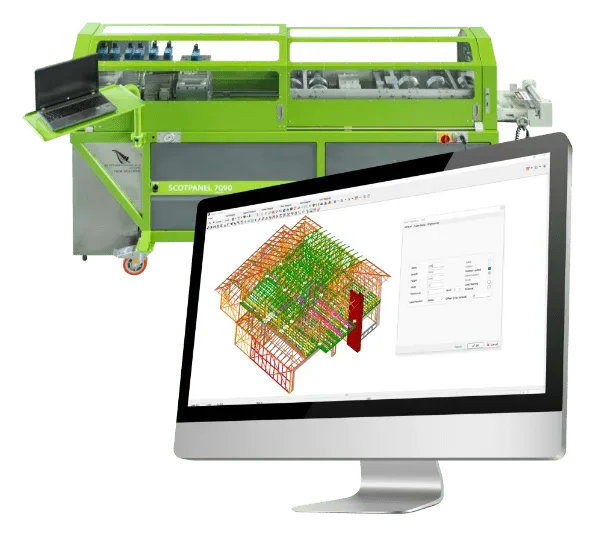
In modern construction, the value of compatible steel framing software is not just in what one platform can do on its own. It is in how well digital information moves from plans to framing models, from engineering to documentation, and from production management to the roll former. That is why the integration of third-party steel design software matters so much in the Scottsdale workflow. When the right tools are connected, steel design becomes more coordinated, steel framing becomes more buildable, and roll forming technology becomes easier to manage as part of one continuous process. Scottsdale’s ecosystem is built around that idea, with ScotSteel, ScotStruct, and ScotRF serving as the core design, engineering, and production platforms, while a range of third-party software can be integrated in different stages of the workflow. Here we go through a list of software that is compatible with Scottsdale’s ecosystem.
A Connected Workflow from Plans to Production
Scottsdale’s software ecosystem is designed to support a logical sequence. A project can begin with imported architectural information or a BIM model, move into framing model generation, continue through engineering and reporting, and then progress into production management before reaching the roll former. That structure is what makes compatible steel framing software so important. Instead of forcing every task into one program, Scottsdale allows users to work with outside tools where they add the most value, while still keeping production tied back to Scottsdale’s own systems. In practice, that means third-party steel design software can support BIM, structural analysis, and documentation, while also supporting framing development and production controls. ScotSteel, ScotStruct, and ScotRF hold that chain together.
Learn more about our ecosystem by reviewing our article “Scottsdale Ecosystem: World Famous Roll Forming Equipment and Powerful Software”.
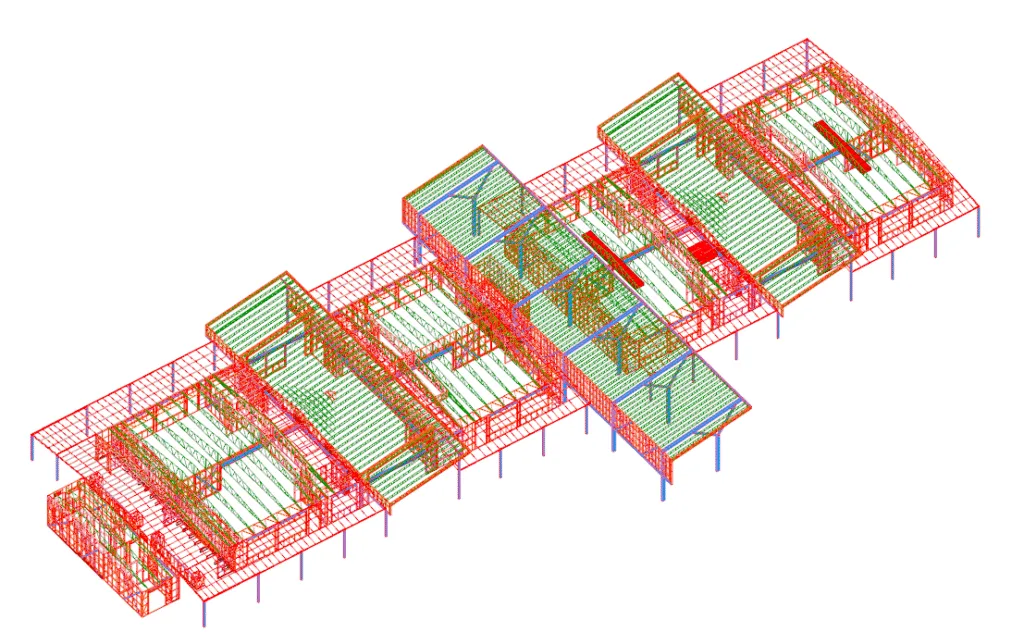
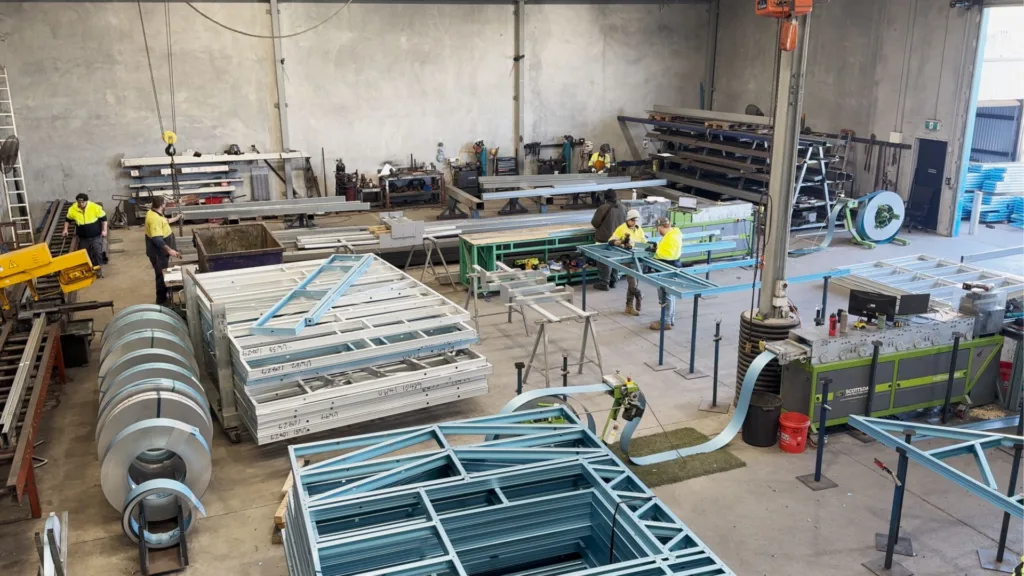
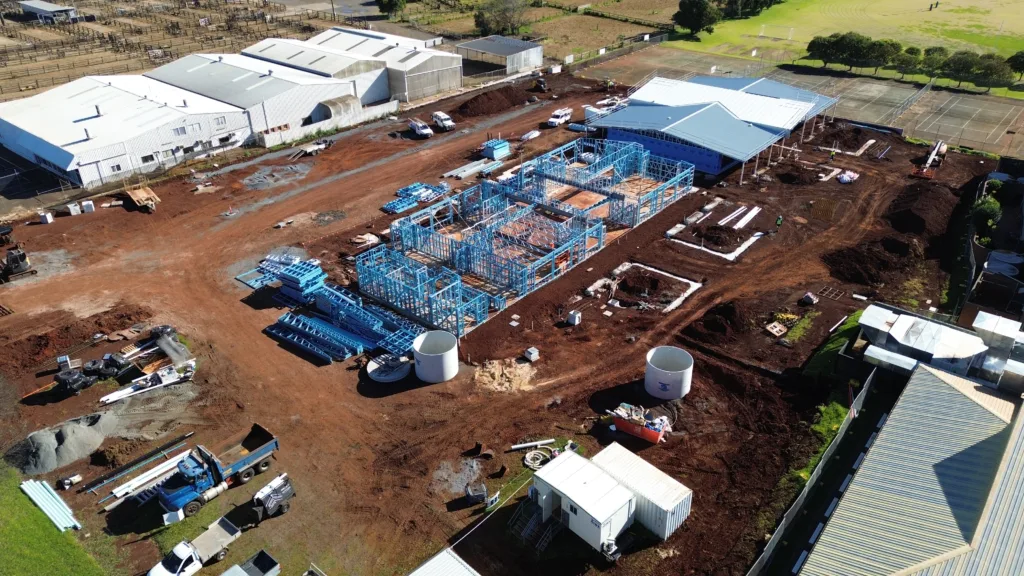
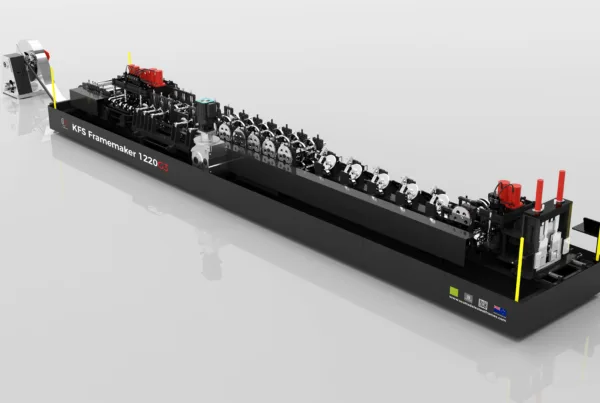
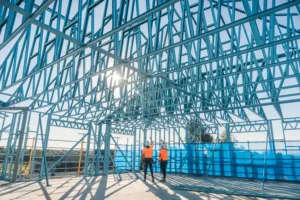
Above images are from the Concordia College in Queensland, Australia fabricated by our customer, TAG Frames, using Scotpanel 7090 and Scottruss 6050 roll forming machines and designed within the ScotSteel software package.
Scottsdale’s Core Software Package
At the center of the ecosystem is Scottsdale’s end-to-end software package. ScotSteel supports the creation and handling of framing data, ScotStruct supports engineering workflows, and ScotRF supports production output for Scottsdale roll forming machinery. Together, they create the handoff points that allow third-party software to contribute without disrupting the path to manufacturing. This is a major advantage for companies that want flexibility in steel design and production workflows but still need a controlled process for fabrication.
Rather than treating software as isolated tools, Scottsdale treats the workflow as one connected environment for steel framing and roll forming technology.
AutoCAD, Tekla, and Sketchfab
AutoCAD helps with precise 2D drafting, drawing revisions, documentation, and markups, making it useful for preparing and refining framing-related project information before fabrication. Tekla adds value through constructible BIM and information-rich 3D structural modeling, helping teams coordinate complex framing conditions and carry detailed model data through the project lifecycle. In a Scottsdale workflow, both platforms help improve the quality, clarity, and usability of project information before it moves into production.
Sketchfab supports a different but still important function: visualization and communication. By allowing 3D models to be viewed, shared, and reviewed in an interactive browser-based environment, it helps internal teams, customers, and project partners better understand the framing concept before manufacturing begins. Together, AutoCAD, Tekla, and Sketchfab strengthen documentation, constructability, and presentation, complementing ScotSteel by improving how project data is prepared, coordinated, and communicated on the path to fabrication.
Scottsdale has a large public library of Sketchfab models that can be accessed at no cost.
Revit and StrucSoft MWF
Revit is one of the most common BIM environments used in construction, and StrucSoft MWF extends Revit for framing-specific tasks. Scottsdale’s workflow materials show that architectural plans can be turned into framing models in Revit using StrucSoft MWF, making it one of the clearest examples of third-party steel design software working inside the Scottsdale ecosystem. This is valuable because many project teams already live in Revit, and being able to move from a Revit-based model into Scottsdale’s production path reduces duplication and improves continuity. For fabricators and builders using digital models, this is where compatible steel framing software begins to show its value.
Vertex BD
Vertex BD adds another route into the workflow. In the Scottsdale ecosystem, Vertex BD supports framing model generation and layout-related workflows, giving users another option for preparing project data before fabrication. That makes it a strong fit as third-party light-gauge steel software, especially for teams that want a model-based framing platform outside the Revit environment.
By supporting multiple entry points, Scottsdale strengthens its position as an open ecosystem for steel framing rather than a closed software island.
Engineering Software that Supports Structural Validation
Once the framing model is created, engineering becomes the next critical step. This is where platforms such as Bentley’s RAM Structural System, CSI software, SPACE GASS, and RSG CFS add value. These tools are not there to run the roll former. Their role is to help engineers analyze, validate, and document the structure so the design is ready for fabrication. SPACE GASS includes Scottsdale section properties, giving engineers a more direct way to analyze Scottsdale members within the engineering workflow. This is an important part of the ecosystem because it shows that third-party steel design software can strengthen the engineering side of steel design while Scottsdale software continues to manage the move toward production.
Learn more by reviewing our article “A More Simplified Way of Designing Cold-Formed Steel Framing”.
Learn more about Scottsdale’s integration with SPACE GASS by reviewing our article “SPACE GASS Now Includes Scottsdale Sections for Spectacular Engineering”.
Reporting and Documentation
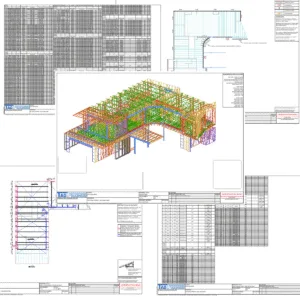
A strong workflow also needs clean documentation. Scottsdale’s process allows reporting and layout stages to sit between engineering and production where needed. That matters because documentation is often the bridge between approved design intent and actual manufacturing. Software like Revit with StrucSoft MWF and Vertex BD can support layout generation and reporting, helping teams prepare the project for shop execution. In a real production environment, documentation is not a side task. It is part of what makes compatible steel framing software useful and reliable. Clean documentation supports better communication, fewer mistakes, and more dependable handoffs in roll forming technology.
Watch our videos below from our Roll Forming with ScotCyd series for more inside look at our process and workflow.
Production Management and Machine Controls
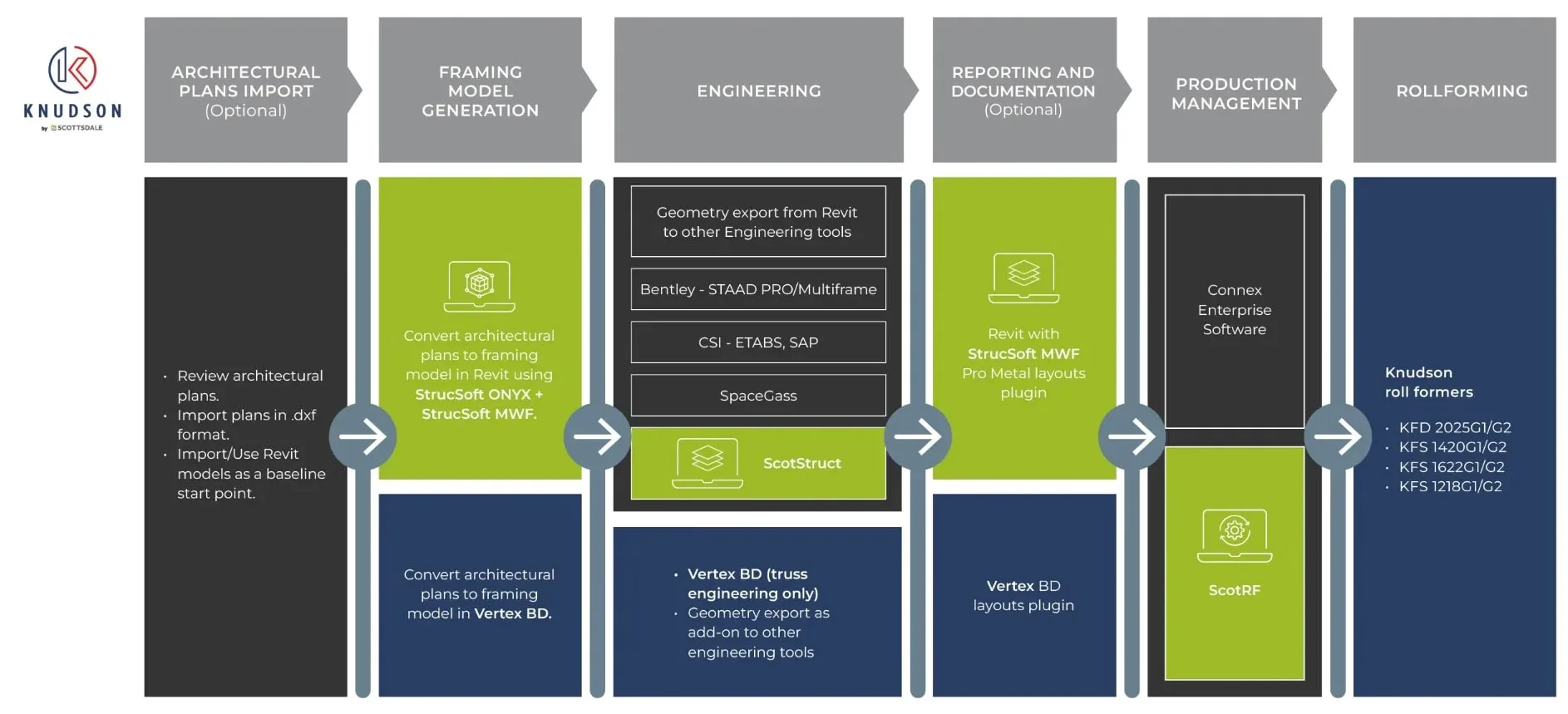
After modeling, engineering, and documentation, the workflow moves into production management. This is where Connex CNC software, Eclipse Pro Enterprise, and ScotRF become especially important. Connex is associated with machine control in Scottsdale’s production paths, while Eclipse Pro Enterprise focuses on scheduling, order handling, coil validation, machine setup, reporting, and manufacturing visibility. ScotRF ties Scottsdale’s own production layer into that process. Together, these platforms show that available third-party light-gauge steel software is not only about modeling. It also plays an important role at the factory level, where approved digital data must be turned into physical members accurately and consistently. This is where roll forming technology becomes the final expression of everything in the software chain.
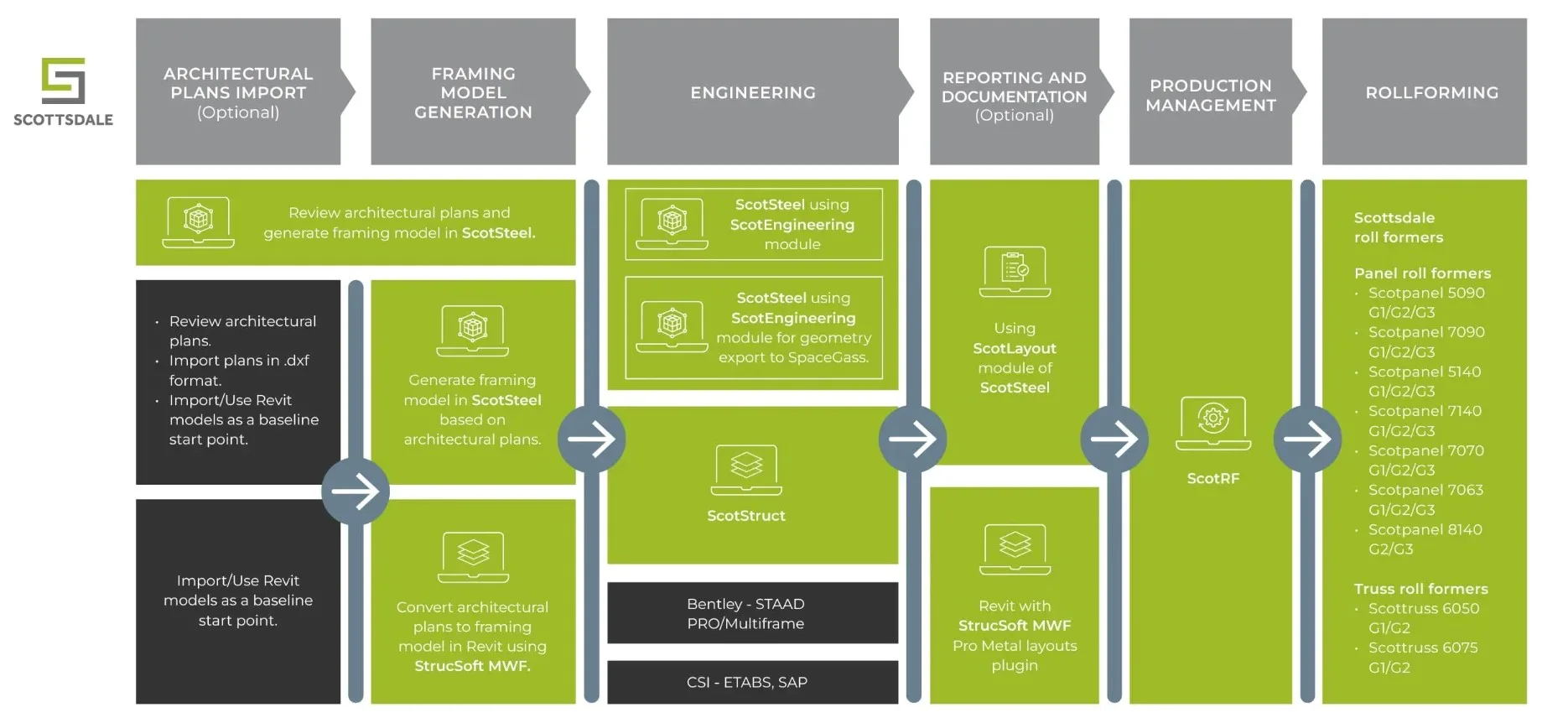
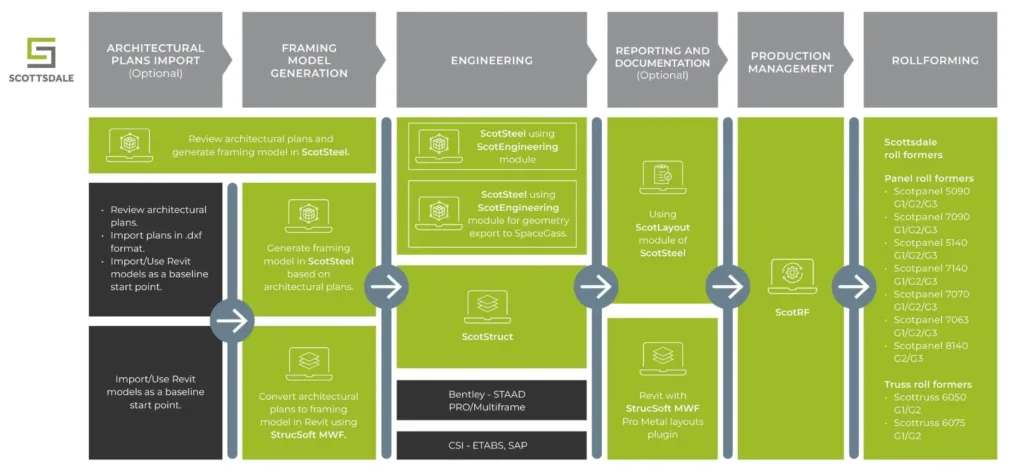
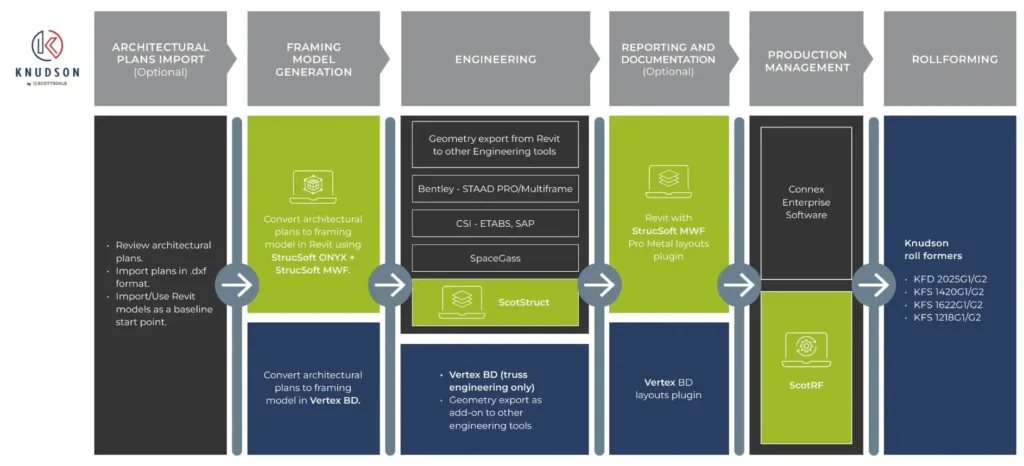
The graphics below summarize the software workflow for Scottsdale and Knudson by Scottsdale roll forming machines.
Business and Operations Platforms Around the Workflow
Scottsdale’s ecosystem also sits inside a larger business environment. Software such as Oracle, Sage, SAP, Loseke, and Keymark supports project controls, operations, estimating, enterprise management, and related business functions. These platforms are not the center of the framing workflow, but they can support the broader operating structure around a fabrication business. That is important because successful steel framing production depends on more than design files alone. Scheduling, planning, costing, reporting, and operational visibility all influence how smoothly work reaches the factory floor. In that sense, these systems complement Scottsdale’s core software by supporting the business side of modern roll forming technology.
Why Our Ecosystem Works
What makes Scottsdale’s approach effective is not that every tool does the same job. It is that each tool can contribute at the right stage without breaking the overall process. Revit and MWF help generate framing models. Vertex BD offers another framing path. Engineering platforms validate the structure. Reporting tools support documentation. Connex and Eclipse support production management and machine execution. Scottsdale’s own platforms keep everything tied together from modeling to fabrication. That is what makes this a strong example of compatible steel framing software in action. The result is a smoother path from steel design to steel framing to manufactured output, with third-party light-gauge steel software and controls supporting the process if and when our customers want to branch outside of the ecosystem.
Additional Scottsdale Roll Forming Solutions and Resources
- Blog – Celebrating 25 Remarkable Years of Steel Framing Leadership in Indonesia
- Blog – The Ultimate Guide to Self-Certification of Light-Gauge Steel Trusses
- Blog – Best Roll Forming Technology Delivering Results in Modern Steel Framing
- Blog – Faster Results with Steel-Framed Structures and Roll Forming Technology
- Blog – Best Customer Success Journey in Steel Framing Roll Forming Technology
- Video – An overview of our Software Development team by Wayne Sawyer, VP of Technology
- Financial Services
To learn more about Scottsdale’s roll forming solutions and steel framing ecosystem, visit us at www.scottsdalesteelframes.com, call us at +1 (888) 406-2080, or email us at rollformers@scottsdalesteelframes.info.